Family photos are never just paper and ink. They are the closest thing most of us have to time travel. A single faded portrait can carry the shape of a grandmother's hands, the exact tilt of a great-uncle's hat, or the light in a childhood home that no longer stands. When you take time to preserve old family photos, you are not just organizing a box of prints. You are building a bridge between the ancestors you remember and the family members who have not met them yet.
The Goal Is Not Perfection: It Is Stewardship
Many families delay preserving old photos because the job feels too big. There are shoeboxes under beds, albums with peeling pages, and plastic bags full of loose snapshots. The good news is that you do not need an archival studio or a huge budget. You need a simple system that respects the fragile materials and the stories they hold. Think of yourself as a steward, not a curator. Your job is to make sure these family photos survive long enough to be seen, named, and loved by the people who come next.
Before You Handle Anything: Prepare the Space
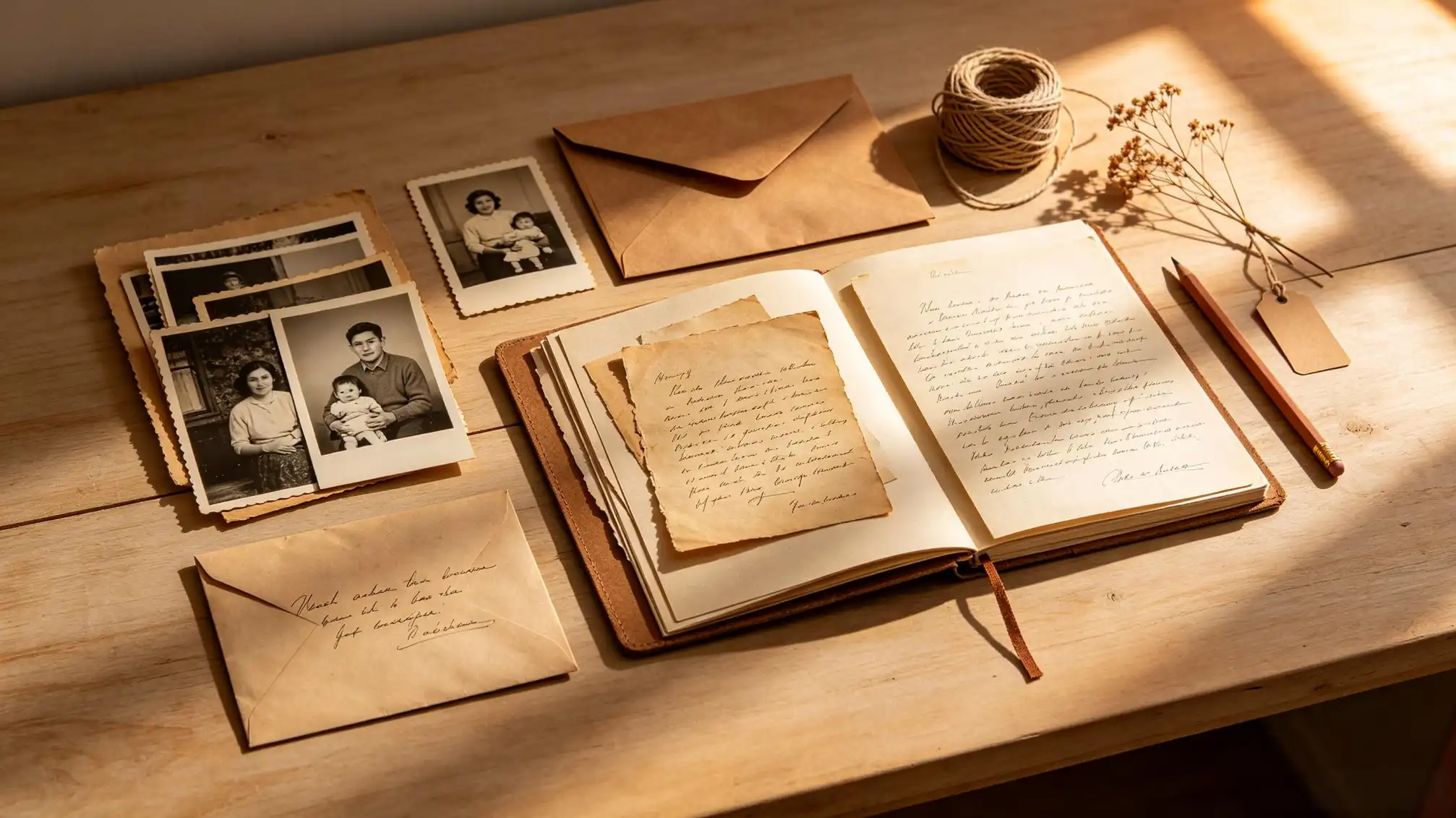
Old photos can be surprisingly delicate. Emulsions can peel, corners can crumble, and moisture can smear faces beyond recognition. Before you spread out a single envelope, wash your hands thoroughly and dry them completely. Choose a clean, dry table with plenty of natural light. Keep food and drinks far away. If your hands tend to be sweaty, consider wearing clean cotton gloves, especially when handling tintypes, daguerreotypes, or very old prints. Handle each photo by the edges, and never bend or force a curled print flat.
The Three-Box Method: Sort Without Losing Context
Instead of trying to organize every photo perfectly in one afternoon, use a gentle three-box method. Take one box, bag, or stack from your home and spread out the contents. Then create three simple categories:
- Keep and share: Faces you recognize, major events, and photos that trigger a family story.
- Keep and research: Unidentified people, mysterious places, or odd dates. Some of these may be identified later by relatives.
- Let go carefully: Duplicates, blurry shots, and damaged prints with no emotional value. You can discard these, or show them to older relatives before making that decision.
This method is slow on purpose. It gives you time to stop, ask questions, and make small notes. You might discover that your grandmother is the woman in the flowered dress, or that a "vacation photo" was actually taken in front of a relative's farmhouse. These little discoveries are what make family history feel real.
Digitize Now, Before the Fading Gets Worse
Every year, old family photos lose a little more color and contrast. Digitizing is one of the most effective ways to preserve family memories because it creates a backup that cannot be destroyed by a leaky basement or a burst pipe. If you have a flatbed scanner, start with the oldest and most fragile photos. Scan at at least 300 DPI for regular prints, and 600 DPI or higher for small, detailed photos. If you do not have a scanner, you can use a smartphone app with a flat, contrasting background, but remember to photograph directly from above and avoid shadows. Save the digital files in a simple folder structure, such as "FamilyName_Year_Event". For example, "Martinez_1958_Wedding" is much easier to find than "IMG_0042".
Make Backups That Outlive Your Computer
A single digital copy is not enough. Between computer crashes, lost phones, and outdated hard drives, digital files can disappear just as quickly as physical prints. Keep at least two backups in different places. One could be an external hard drive in a fire-resistant box. Another could be a cloud service that your family can access. If you are the person who holds the only copies, make a plan for who will receive them one day. Add a note in your family letters or on an external drive with instructions for the next family historian.
Turn Names into Legacy: Caption Every Photo with Context
The most important preservation step is not scanning or acid-free boxes. It is writing down what you know. A photo without names is beautiful, but it is silent. When you identify a face, write directly on the back of the photo with a soft graphite pencil, not a pen or marker that can bleed through. Use words that will help future generations: "Grandma Elsie and her sister Rosa, Chicago, 1927." You can also add captions to your digital files in the metadata or in a simple spreadsheet. If you want to invite relatives to help identify faces and share their own memories, consider building a shared family stories page where everyone can contribute. For example, you can publish selected scans on a family stories page and ask cousins, aunts, and older relatives to confirm names and add details. This turns a solitary project into a true family history collaboration.
Store for the Long Tomorrow: What to Do with the Originals
After you have digitized your old family photos and written down the names, you still need to protect the original prints. The enemies of paper photographs are direct sunlight, heat, humidity, insects, and sticky plastic sleeves. Move albums and envelopes out of attics, basements, and garages. Store them in a cool, dry, dark place where the temperature is fairly stable. Use acid-free boxes, polypropylene sleeves, or archival albums. If a photo is in a photo album with magnetic or "self-stick" pages, remove it carefully. These pages can damage photos over time. If a photo is fragile, do not try to peel it dry. Take it to a professional photo conservator or carefully look up safe methods before attempting any repair. It is better to have an imperfect original than to lose a family photo forever.
Let Family Stories Guide What You Keep
As you work through your collection, remember that preservation is not only about the object. It is about the family history behind the object. A slightly blurry photo of a great-grandfather standing next to an old truck can be far more valuable than a perfect landscape postcard. Pay attention to the photos that make someone in your family pause, laugh, or tear up. Those are the images that matter. When you find them, take an extra minute to write down the sound of that laughter or the name of the story that followed. That small note is as much a part of your family's heritage as the photo itself.