Old family photos are more than faded prints — they are the closest many of us get to meeting our ancestors face to face. That hesitant smile in a sepia portrait, the handwriting on the back of a snapshot, the rips and creases from decades of moving: every mark is part of your family history. But without care, those physical fragile archives will not survive. The good news? With a fresh, practical approach, you can preserve old family photos for family history in a way that honors the originals and makes your family memories easier to share.
When we talk about preserving family photos, the conversation often centers on acid-free boxes and scanning DPI. Those details matter, but the deeper reason is connection. Your children, grandchildren, and the generations after them deserve to see the real faces behind the family stories. A preserved photograph lets them sit with Great-Aunt Maria’s knowing look or wonder at the car in your grandfather’s driveway. That emotional thread is what transforms a pile of paper into family history.
This is also why the way you preserve matters. If you only focus on physical storage and never pause to name faces, the images survive but the meaning fades. A photo of a stranger is just an old piece of card stock. A photo of “Rosa, standing in front of the bakery she opened in 1924” is a monument.
How to Preserve Old Family Photos: A Fresh Angle
Most advice on preserving old family photos focuses on what to avoid. That list is important, but let’s start with a proactive mindset. Instead of asking “How do I stop these photos from decaying?” ask “How do I bring them into the next century?” That shift changes everything. You are not trying to freeze the past — you are building a bridge from your family’s story to its future.
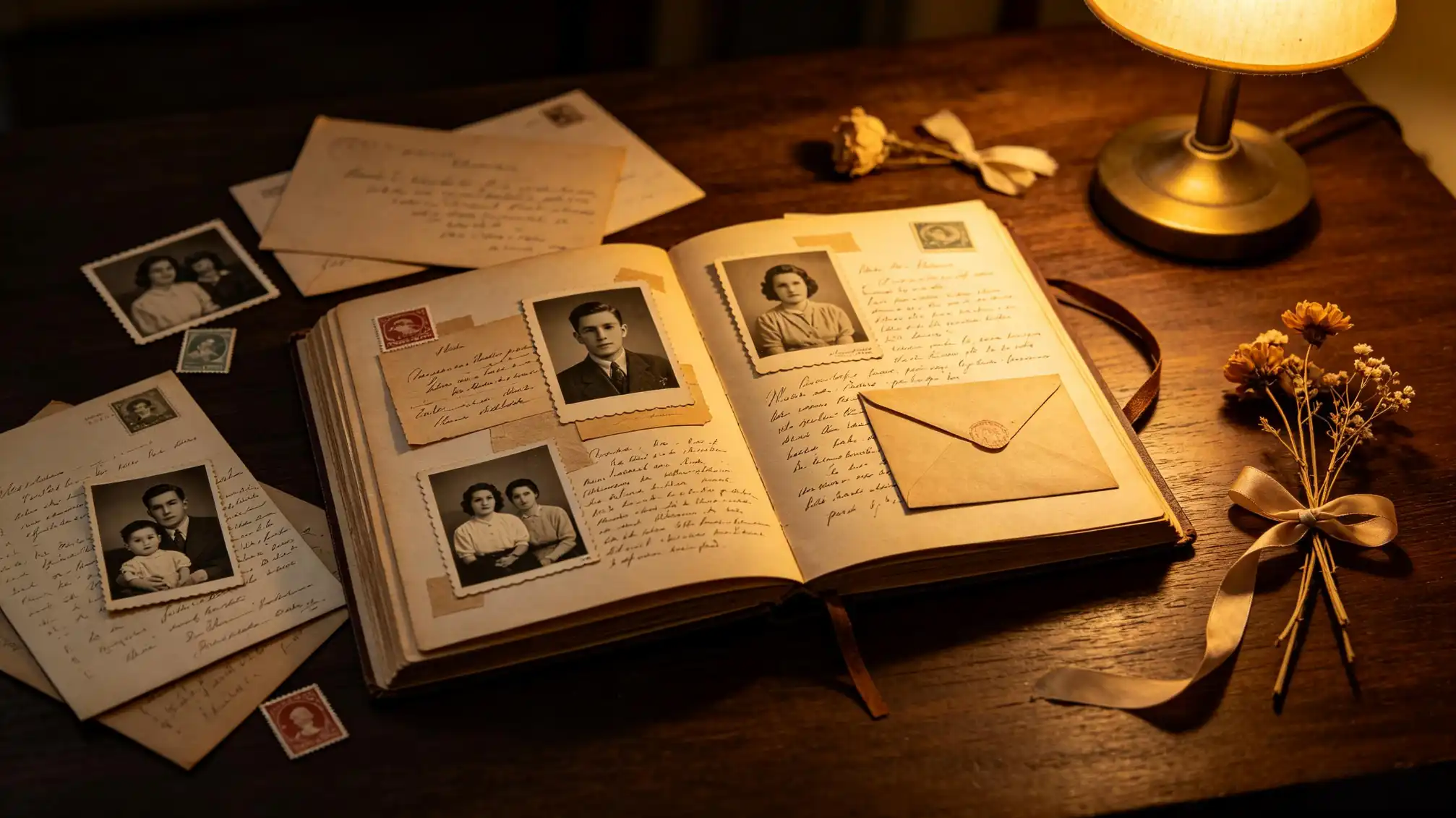
1. Handle With the Respect They Deserve
Start with the physical original. Clean, dry hands are the bare minimum. Wear soft cotton gloves if the photos are especially valuable, and always support them from underneath with both hands. Never fold or clip them, and keep them away from any surface where they could slide, spill coffee, or pick up dust. This sounds simple, but many family photos are lost to accidents that happen during a quick spring cleaning session.
2. Scan the Photo, Not Just the Memory
Scanning is the single best way to ensure your old family photos make it into your family history. A flatbed scanner with a resolution of 300 DPI is enough for most prints; if you have tiny faces or plan to enlarge, go to 600 DPI. Save each image as a high-quality TIFF or PNG for the master copy, and make JPEG copies for everyday sharing. Do not use scans that compress automatically — those will lose the detail you want for future generations.
Scan the back of the photo too. Notations like “Betty and Al, Coney Island, 1962” are pure family history treasure. That little scribble tells your ancestors exactly why the photo mattered.
3. Store Originals the Right Way
Once scanned, store the original in an acid-free, lignin-free photo box. Place each photo in a separate archival sleeve. Avoid magnetic albums, PVC plastic sleeves, rubber bands, and paperclips. Keep the box in a cool, dry room — aim for 68°F (20°C) and under 50% humidity. Basements and attics are usually too damp or too hot; a closet shelf in your main living space is often better. If you have multiple drawers, label the outside clearly so your family pictures are easy to find.
Organizing Family Photos into Family History
Preserving old family photos is not a one-time act. It is an ongoing exercise in storytelling. After scanning, spend time naming the people, places, and approximate years. If you are not sure who someone is, ask older relatives while you can. Their memories are the missing captions for your family photos.
Create a simple folder structure on your computer or external drive: Folder by family branch, then subfolders by decade, then by event. For example, “Mancini Family > 1940s > Maria’s Wedding.” In each image file’s metadata, add the full names, location, and any story that you know. This hidden layer of information will be your family history gold mine in the years to come.
Share Your Family Memories With the People Who Matter
A preserved family photo that lives on a hard drive is protected but invisible. To truly extend the life of old family photos, share them. Send copies to cousins. Add them to a private family album. And if you have gathered stories to go with the images, consider writing them down on your family’s storytelling page — that place lets you combine the scanned photo with the voice and memory of the person who can explain why that little white dog was always in every portrait.
Sharing is also the best insurance. When multiple people hold copies, a house fire or a spilled bottle of water cannot erase your family history. The original might be gone, but the face and the story remain.
Keep the Love in Family Photos
As you go through your boxes and albums, you will likely feel a mix of joy and overwhelm. That is natural. Do not try to do everything in one evening. Preserving old family photos is a slow, meditative work. Start with one small bundle. Scan a single bag of loose photos. Write the names you know. Store the originals safely. Then, as the day allows, take the next step.
The goal is not perfection. The goal is keeping your family memories alive in a way that future generations can hold, look at, and feel proud of. Whether you have one shoebox of old snapshots or an entire armoire of albums, every photo you save is a small victory against time and forgetting.