Tracing your ancestors step by step rarely starts in a database. It starts with the physical evidence already scattered through your home and your relatives' memories. Professional genealogists use a repeating cycle: gather, organize, hypothesize, verify, and share. This guide walks you through that cycle without jargon, so you can build a family history that holds up to scrutiny and brings real people back into focus.
Begin Before You Search: Inventory the Evidence
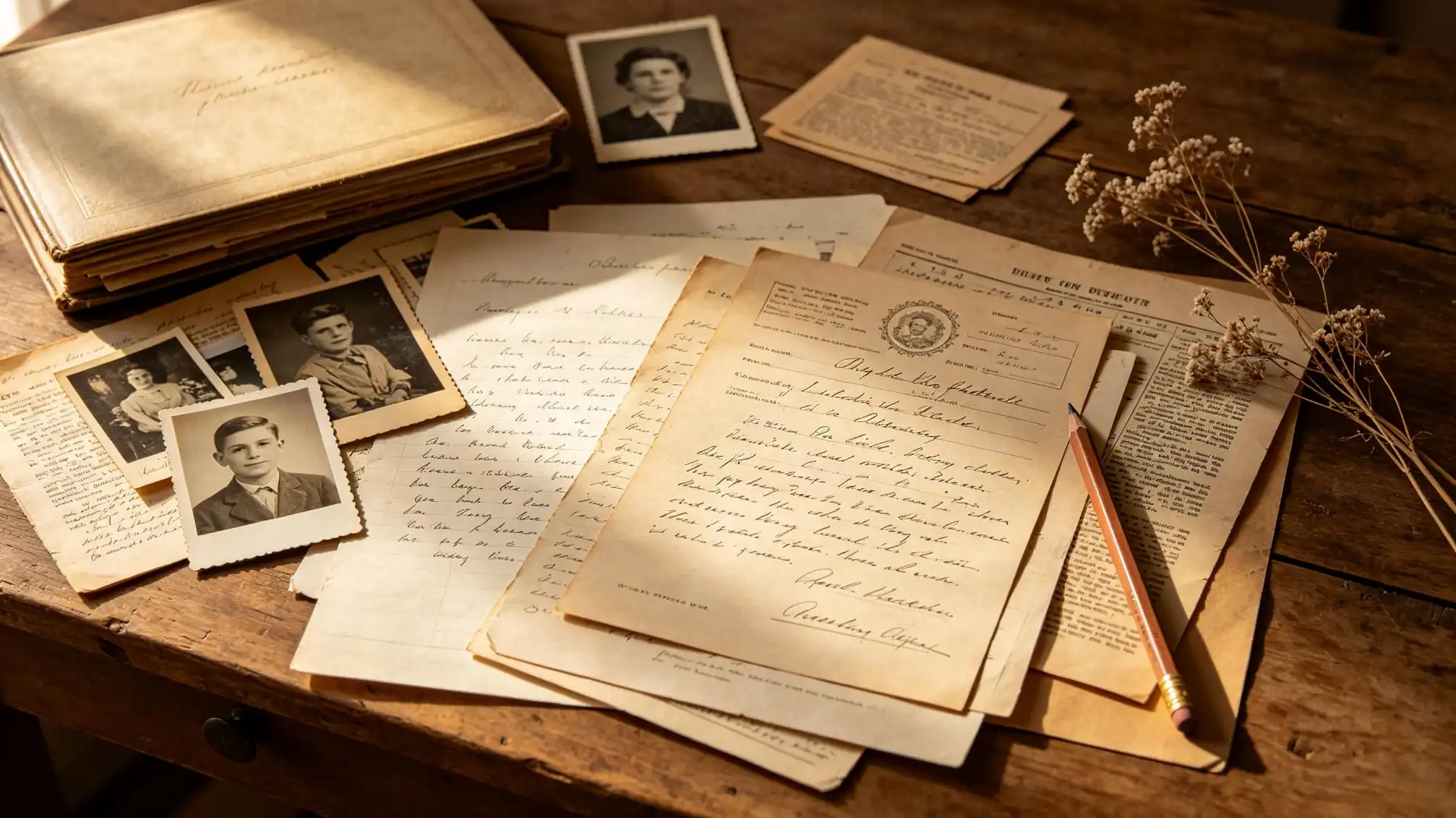
The quickest way to make progress is to do a room-by-room inventory. Look for birth certificates, marriage licenses, death notices, passports, military discharge papers, naturalization records, and family Bibles. Check inside photo albums for names written on the back. Old letters often contain addresses and dates that are far more reliable than memory. These artifacts become the backbone of your research because they provide exact places and timeframes to guide every later search.
Interview the Living Generations First
Before you dive into online genealogy, talk to the oldest relatives you can reach. Set up a call or visit and ask open-ended questions. Which neighborhood did they grow up in? What do they remember about their grandparents? What stories were repeated at family gatherings? Record the conversation if you can, or take detailed notes. You will immediately gather names and dates, but more importantly, you will pick up clues about migration patterns and surname changes. As you collect these interviews, consider comparing your notes with the family stories shared on our community page — sometimes another branch has already solved the same puzzle. That kind of cross-checking can save you months.
Build a Simple Family Tree as You Go
You do not need expensive software to start. A simple chart with three generations will do: you, your parents, your grandparents. Fill in what you know from home records and interviews. Leave blank spaces where information is missing, and write the source next to each fact. This early chart is not a finished product; it is a working map that shows you exactly which gaps to attack first. Update it every time you verify a new fact.
Work from the Known to theUnknown
One of the most common errors people make is trying to jump directly to a famous ancestor or an ancestral village. Resist that urge. Genealogy works best when you move one generation at a time. A death certificate will give you the full name of the deceased person’s parents. A marriage record will reveal the witnesses, who are often siblings or close friends. Each document should produce at least one new clue. If a record mentions a relative, chase that relative first — they can be the bridge to the next generation.
Use Record Types That Match Your Family’s Life
No single database contains everything. Different eras and locations call for different evidence. For a family that lived in one town for generations, start with vital records and church registers. For an immigrant family, look at passenger lists, naturalization papers, and census records. If your ancestor owned land, study deeds and tax lists. If they served in the military, request pension files — those often contain entire family summaries with places of birth, marriages, and children. Match the record set to the person’s circumstances instead of repeating the same generic search.
Organize Evidence and Flag Gaps
As your research grows, keep a simple checklist of every ancestor and every vital event: birth, marriage, death. Mark whether you have a primary source, a secondary source, or no source at all. This discipline is what separates a solid family tree from a pile of unsourced names. When you cannot find a record, note what you searched and why the record may be missing.Maybe the county line changed, the courthouse burned, or the surname was spelled differently. Those notes are not dead ends; they are the raw material for your next breakthrough.
Verify Before You Add: Avoid the Crowded Family Myth
Online family trees are full of people with the same name as your ancestor, but that does not mean they belong to your family. Before you attach a new person to your tree, you need at least two independent pieces of evidence pointing to the same conclusion. Compare ages, places, and household members. Pay special attention to middle names and nicknames. A man named John Smith with three wives in different states may be three different men. Verify each step with original records, not just transcripts, and you will save yourself from a long chain of errors.