Family History Questions That Actually Get Relatives Talking
You sit down with your grandmother, pull out your phone, and suddenly your mind goes blank. You know you want to learn about her childhood, her parents, the hard times and the funny moments. But what do you actually ask?
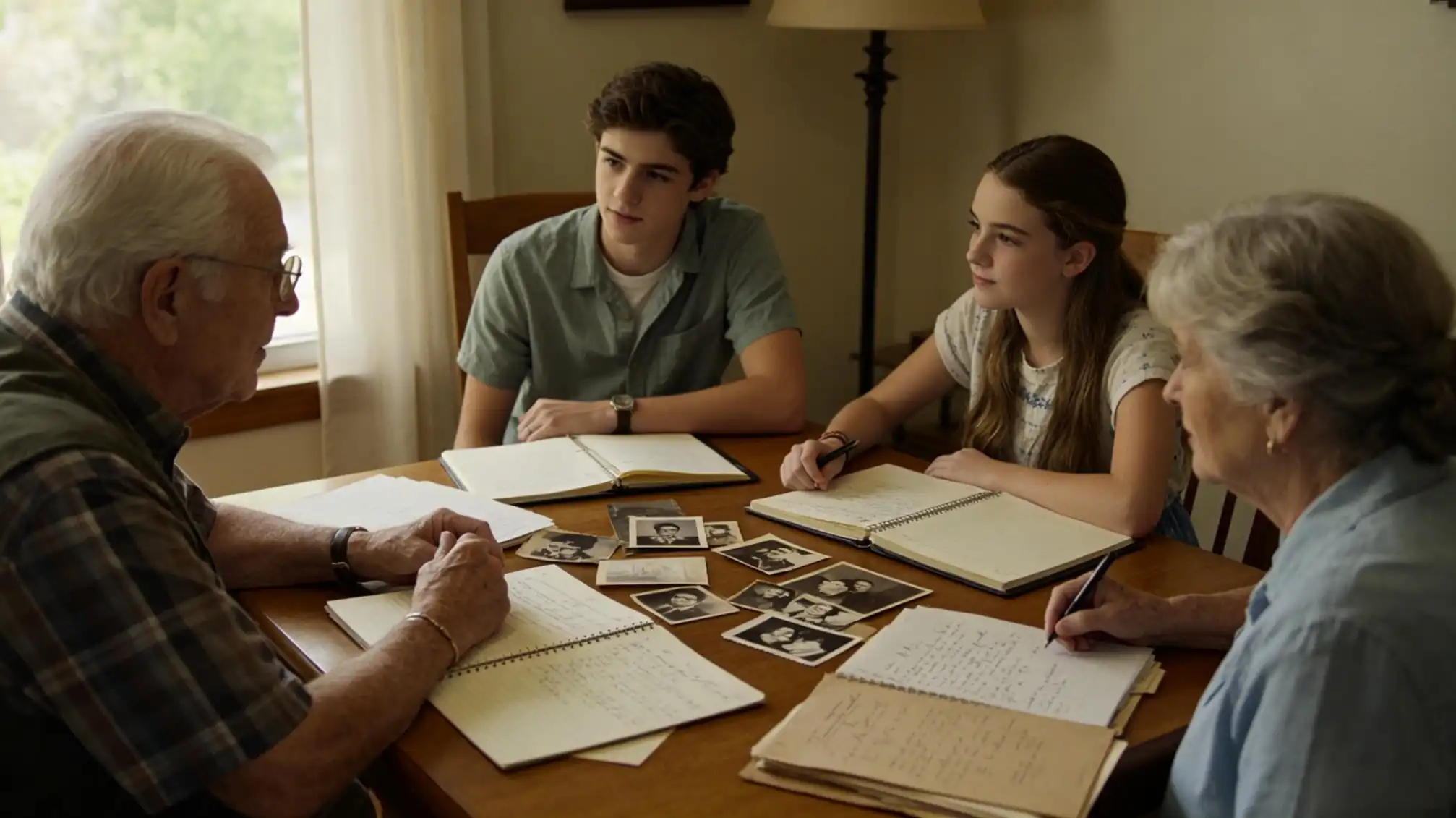
If you are looking for the best family history questions to ask relatives, you don't need a long interrogation script. You need the right family history questions that open doors to stories, not just one-word answers. This guide will help you interview parents, grandparents, and other relatives in a way that feels natural, warm, and memorable.
Start with Everyday Memories
The best family history questions often sound simple. Instead of asking, “What was your childhood like?” try something more specific: “What did your kitchen smell like on Sunday mornings?” or “What game did you play outside with your neighbors?” Specific questions help relatives travel back in time and recall vivid details.
For a parent or grandparent, everyday memories are easier to access than broad life summaries. Ask about their best friend in grade school, the family pet, or the first song they ever bought. These moments may seem small, but they reveal the texture of a life.
Ask About Traditions and Rituals
Family history is built on the things you do together. Ask relatives about holiday meals, birthdays, and little rituals that were passed down. Questions like “How did your family celebrate birthdays when you were young?” or “What was the one dish your mother always made for special occasions?” often lead to beloved stories.
You can also explore how traditions changed over time. Ask, “Is there a tradition you wish we still practiced today?” This invites reflection and gives you a deeper understanding of what mattered to them.
Explore Hard Times and Lessons
Not every memory is happy, but those moments often shape a family. You can gently ask, “What was the biggest challenge you faced when you were young?” or “What did your family do when money was tight?” These family history questions help relatives share resilience and wisdom.
Be ready to listen more than you talk. If your grandparent pauses, let the silence breathe. Often the most powerful stories come right after a long pause.
Ask About People and Relationships
Your relatives knew people you never got to meet. Ask about their parents, siblings, aunts, uncles, and close family friends. Instead of “What was your father like?” try “What made your mother laugh?” or “How did your brother annoy you as a kid?”
These kinds of family history questions reveal personality and humor. You can also ask about your own parents as children. Say, “What was Dad like when he was ten?” or “Did Mom ever get into trouble at school?” Relatives love to share those stories, and you will learn a side of your family you never knew.
Dig into Family Names and Places
Names and places act like landmarks in family history. Ask about the origin of your surname or a family nickname. Ask about the house they grew up in: “What did the street look like?” “Did your grandmother live nearby?” “How did your family end up in this town?”
If your ancestor immigrated, ask about the journey. “What did they bring with them?” “What did they leave behind?” These questions connect your family to larger history.
Capture Fun and Lighthearted Details
Not every question needs to be serious. Ask about first dates, favorite songs, fashion mistakes, or the worst haircut they ever had. You might be surprised by the laughter you unlock. Lighthearted questions also make it easier for a reluctant relative to open up.
Consider asking, “What do you know about how your parents met?” or “What was the most rebellious thing you did as a teenager?” These moments become the stories you will repeat for years.
Use Follow-Up Prompts to Keep the Story Going
The best family history questions are only the beginning. Use follow-up prompts like “What happened next?” “How did that make you feel?” and “Why was that important?” These simple phrases encourage relatives to keep talking and reveal details they might otherwise skip.
You can also echo their words: “You said the house had a blue door”—that shows you are listening and invites them to elaborate. Recording the conversation helps, but always ask permission first.
Bring It All Together with Family Stories
Once you have collected these family history questions and heard the answers, you will have a treasure trove of stories. You can preserve them by writing them down, making a photo book, or recording a short video. Sharing your family history with others keeps it alive for the next generation.
If you would like a place to reflect on your family’s unique moments, visit family love stories to see how others celebrate and remember their relatives.