A family tree template is more than a decorative chart — it is a practical tool that turns scattered names, dates, and stories into a clear visual map of your family history. Whether you are helping a parent record memories or starting your own genealogy project, a well-structured template saves time, keeps facts organized, and makes it easier to share your discoveries with relatives. In this guide, you will learn how to get the most from a family tree template, even if you have never built one before.
Choose the Right Family Tree Template for Your Project
Before you begin entering names, take a moment to select the template that matches your goals. Free family tree templates come in many forms: some focus on three generations, others expand to five or six, and a few are designed specifically for children or classroom projects. If you prefer working on paper, a printable template with clean lines may be best. If you enjoy digital tools, look for a template that can be edited in spreadsheets, word processors, or online design platforms.
Consider the amount of information you already have. If you are just starting, a simple three-generation family tree template gives you a comfortable starting point without feeling overwhelming. For deeper research, choose a family history template that includes fields for birth dates, marriage dates, locations, and notes. The right template should feel expandable — you can always add branches later.
Start With What You Already Know
You do not need to know every ancestor before you begin. In fact, the smartest way to use a family tree template is to fill it in with the names you already know, starting with yourself and working backward. This prevents frustration and gives you a clear picture of the gaps you need to explore.
Gather simple facts from memory and from relatives. Look through old photo albums, baby books, and greeting cards. Ask parents and grandparents about their parents and grandparents. Even a few names and approximate dates can give your template a solid foundation. As you work, keep a separate list of questions for family members — birthdays, birthplaces, maiden names, and military service are great conversation starters.
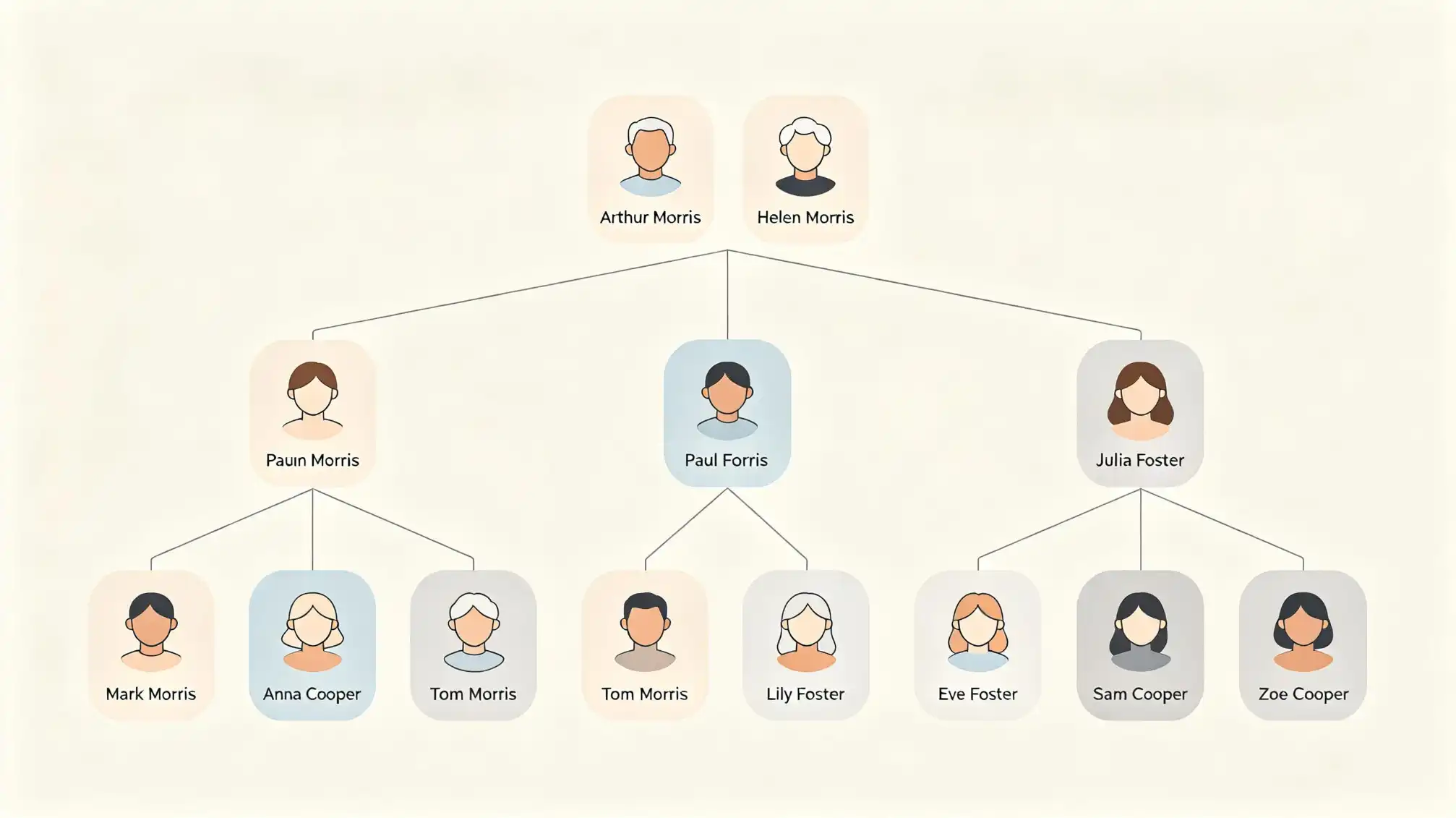
If you are new to family research, exploring how other families organize their records can be helpful. You can find inspiration on the family page at FamilyLove, where practical examples and shared experiences make the process feel more approachable.
Fill In Branches Generation by Generation
Once your template is in front of you, start with your own name at the base (or root, depending on the design). Add your parents in the next level, then your grandparents, and continue upward. For a family tree template that shows descending generations, begin with the oldest ancestor at the top and work down to the youngest. Always follow the template’s layout so the relationships remain clear.
Use consistent formatting for every entry. Write full names exactly as they appear in official records, and use the same date format throughout. For example, write “12 March 1924” instead of mixing “3/12/24” and “March 12, 1924.” This small habit makes your family history template much easier to read and verify later.
Add Dates, Places, and Personal Notes
Names alone do not tell your family’s story. A family history template should include spaces for important dates and locations. Birth dates, marriage dates, and death dates create a timeline for each ancestor. Adding places helps you connect your family to historical events and migration patterns. You might be surprised to find three generations born in the same small town or discover a relative who moved across the country.
Do not forget the stories behind the facts. If your template has a notes column, use it to record occupations, military service, religious traditions, or fun memories like “Grandma’s famous apple pie.” If the template does not have a notes area, attach extra pages or add a digital companion file. These details turn a simple chart into a meaningful family heirloom.
Use Your Template as a Relationship Guide
A family tree template is also a powerful tool for understanding how relatives are connected to you. Once the branches are filled in, you can visually trace your relationship to a second cousin, identify your great-grandparents’ siblings, or explain to your children how they are related to Aunt Maria. This makes the template useful for family reunions, school projects, or simply answering “Who is that?” when looking at old photos.
You can also use your template to spot missing information. If a branch stops at your great-grandfather, that is your next research clue. Make a note in your template or on a separate checklist, then ask relatives or search public records. The template becomes a roadmap for future discovery rather than a static document.
Keep Your Family History Template Updated
Genealogy is an ongoing project. New cousins may appear, DNA tests may reveal unexpected connections, and older relatives may share memories you have never heard. Plan to update your family tree template at least once a year. Choose a regular date, such as around the holidays when family members are together, to review new information together.
If you use a printable template, make copies before making major changes. If you use a digital template, save a backup file and create a new version each year. This practice protects your work and gives you a history of how your tree grew over time. You can also share your updated template with relatives — many will be happy to fill in gaps or correct small errors.