For generations, family trees lived on large paper charts, carefully rolled up and unrolled only on holidays. Those charts had a problem: they were static. One person made a mistake, or missed a marriage date, and the chart stayed wrong for decades. The online family tree changes all of this. Instead of a fixed drawing, it becomes a dynamic digital project that can be edited, connected, and shared by everyone who cares about the family story.
A Living Document Instead of a Static Chart
When you switch to an online family tree, the first thing you notice is that the information can change without crumpling the paper. If your aunt corrects the spelling of a great-grandmother's maiden name, the correction appears instantly for everyone. If your cousin uploads a transcript of a 1920 census record, the document sits right beside the relevant ancestor. This shift turns genealogy from a solitary task into a family-wide effort.
Digital family tree platforms also allow you to attach photos, scanned letters, audio clips, and video interviews. A paper chart can only show names and dates; a digital tree shows the texture of someone's life. You can look at a photographer ancestor and see his actual studio portrait, or listen to a grandfather explaining a 1940s immigration story in his own voice. That kind of context is what makes history feel real.
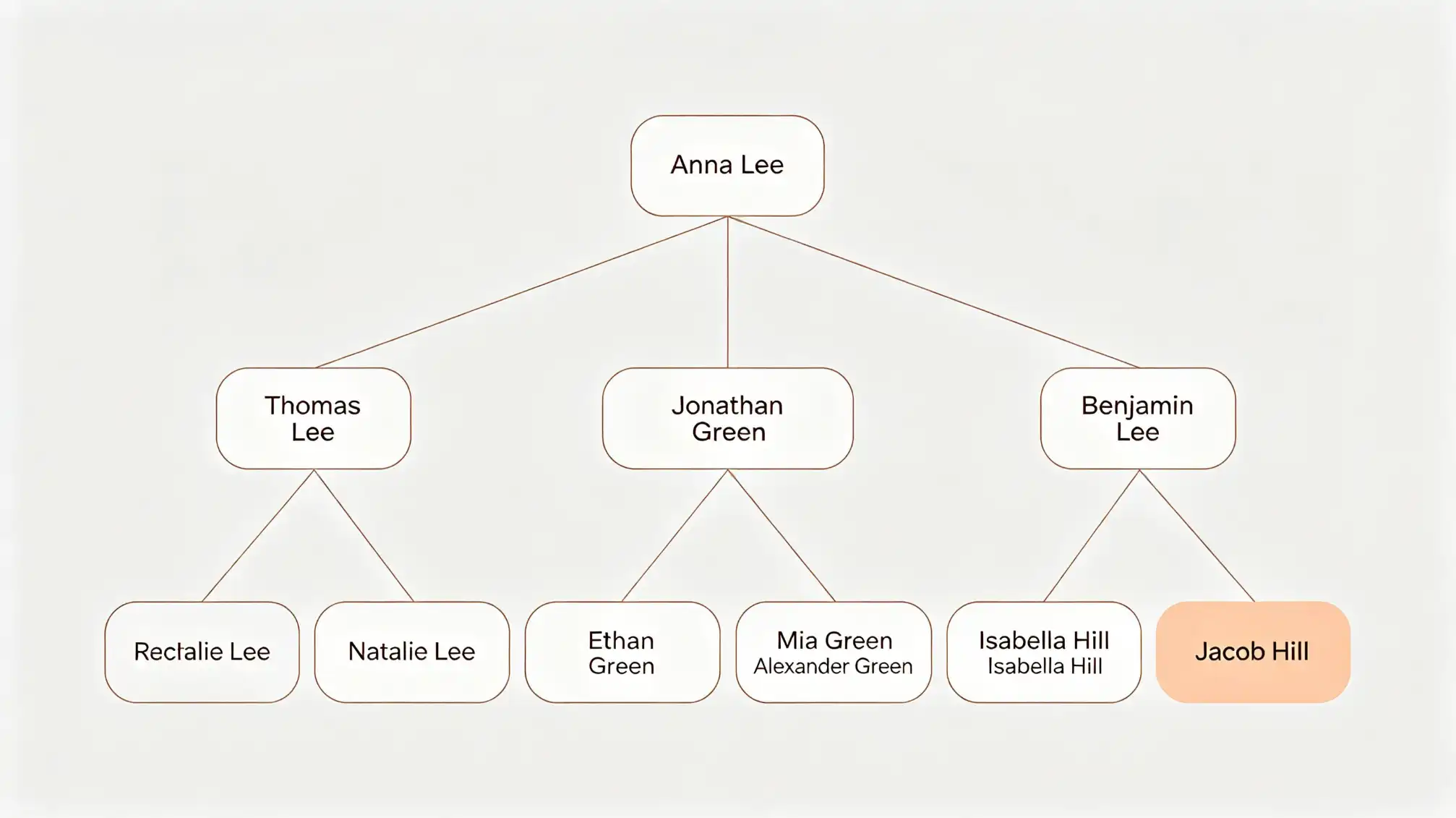
Collaboration That Keeps Everyone on the Same Page
One of the strongest reasons to move to an online family tree is collaboration. Traditional software forced you to send a new file by email every time you made progress, then merge dozens of conflicting versions. Online trees live in the cloud, so multiple relatives can work on them simultaneously. A cousin in another city can add a branch you know nothing about, while your sister corrects birth dates for the maternal side. The entire tree evolves in real time.
Most platforms also include activity logs. You can see exactly who made which edit and when, which matters when two sources disagree. If someone adds a dubious date, you can easily discuss it in the comment thread attached to that person. This built-in accountability prevents the silent errors that used to spread across paper copies.
Making Research More Organizational Than You Thought Possible
Genealogy can quickly overwhelm even the most organized hobbyist. Between census records, marriage certificates, passenger lists, and gravestone photos, the pile of paper grows fast. An online family tree turns that pile into a structured archive. You can tag a source to a specific fact, like attaching a military draft card to a grandfather's birth record. This kind of citation tracker helps you review your own research confidence level and avoid re-checking the same record twice.
Digital trees also offer multiple views: pedigree, descendant, timeline, and family map. The timeline view is especially useful because it places every ancestor in historical context. You can see that your great-grandparents married in the middle of a county downturn or that your uncle was born during a wartime year. Those connections are hard to spot in a traditional chart, but they become clear in an interactive digital environment.
Choosing the Right Online Family Tree Platform
If you are comparing digital family tree tools, keep a few practical criteria in mind. First, consider privacy controls. Who can see living relatives' information? A good platform lets you mark someone as living and restrict their details to close family members only. Second, look at export options. Your research is a lifetime of work; make sure you can download a GEDCOM file or PDF of your tree if you ever decide to switch. Third, examine source integration. Some platforms connect directly to large genealogy databases, which can speed up your search for census and birth records. Finally, test the collaboration features. That means inviting a relative and seeing how easy it is to add a photo or correct a date. A tool that feels intuitive to your least technical family member is the one that will actually get used.
Once you have narrowed down your options, start small. Build a simple tree with your parents, grandparents, and siblings. Add a few key dates and places. Then invite one relative to contribute. This can be a natural moment to create a shared family page, like the one at familylove.love/family, where relatives can exchange stories and photos while your online tree grows in the background. The goal is to make genealogy a shared project, not a one-person burden.
The Long-Term Rewards of a Digital Legacy
An online family tree is not just a convenience; it is a preservation tool. Paper fades, hard drives fail, and email attachments get lost. A reputable cloud service gives your family history a durable, accessible home. You can add a note about family traditions, upload a grandmother's recipe card, or link to a museum exhibit about your hometown. Anthropologists call this type of data a cultural memory; for you, it is simply the story of who you are.
As the tree grows, so does the sense of connection. Younger relatives who never met a great-aunt can still hear her story through an attached audio file. They can see how their own families fit into a larger narrative. This is the true power of a digital tree: it converts genealogy from a hobby into a living conversation across generations.
If you are ready to start, do not wait for the perfect family tree software. Pick a platform that meets your core needs and begin entering what you already know. The details can be refined later. What matters is that you start the process and invite your family to join you.