Learning how to build a family tree doesn't have to be intimidating when you begin with parents and grandparents. Every family story has a starting point, and the simplest one is right in front of you: the people who raised you and the generation that raised them. By gathering the names, dates, and places they remember, you create a foundation that makes a family tree feel real and manageable. This approach also helps you ask the right questions before you dive into old records or complicated ancestor research.
Why Starting with Parents and Grandparents Works
Your parents and grandparents are the living link to the past. They know the names of their own parents and grandparents, and they can correct rumors before they become family legends. A family tree built from this personal knowledge is more accurate and more emotionally meaningful than a chart copied from an online database. It is also less overwhelming. Three generations give you a clear structure to add to piece by piece.
Step 1: Collect What You Already Know
Before you schedule interviews, sit down and write out everything you already know. Even a list of names and birthdays is enough to create the skeleton of your tree. Start with yourself, then add your parents, then your grandparents. Include middle names, maiden names, nicknames, and approximate dates if the exact ones are missing. This simple act clarifies what you already have and shows you which gaps need attention.
- Full names for each parent and grandparent
- Dates of birth, marriage, and death if known
- Cities or countries where they lived
- Occupations and meaningful life events
- Family sayings, traditions, or stories that mention relatives
This list is your working document. Keep it in a notebook or digital note app so you can add details as they come back to you. You can also turn it into a family group sheet for each pair of parents, which is a handy way to track brothers and sisters later.
Step 2: Talk to Parents and Grandparents
The richest source of family history is often a conversation. Parents and grandparents carry memories that no record will ever capture, from the way your great-grandmother laughed to the reason your grandfather chose his profession. Ask open-ended questions and let the conversation wander. Record audio or video if everyone agrees, and always take notes. If they feel nervous, ask permission first and start with a short conversation. Sometimes the best stories come after a cup of tea, so keep the recorder running.
Questions to Ask
- Where did you grow up, and what do you remember about the house?
- Who were your best friends or favorite relatives as a child?
- How did your parents meet, and what kind of people were they?
- Are there any family traditions that have been passed down?
- What stories about your grandparents or great-grandparents did you hear when you were young?
As you listen, keep a separate list of people they mention. You may discover aunts, uncles, or cousins who were not on your initial chart. These side branches make your family tree feel alive and help you understand how your direct ancestors fit into a larger clan. For more ideas on connecting with relatives during these conversations, the family hub at FamilyLove offers practical suggestions.
Step 3: Organize by Generations
Once you have collected initial information, arrange it by generation. Put your grandparents at the top or center, depending on the style you choose, then connect your parents and finally yourself and your siblings. This structure makes it easy to see the direct line and the branches. You can use a simple pen-and-paper chart, a spreadsheet, or an online template. Many tools let you color-code branches and attach photos or documents. You can also create a designated spot on your wall or in a notebook for each generation, which makes updates simple.
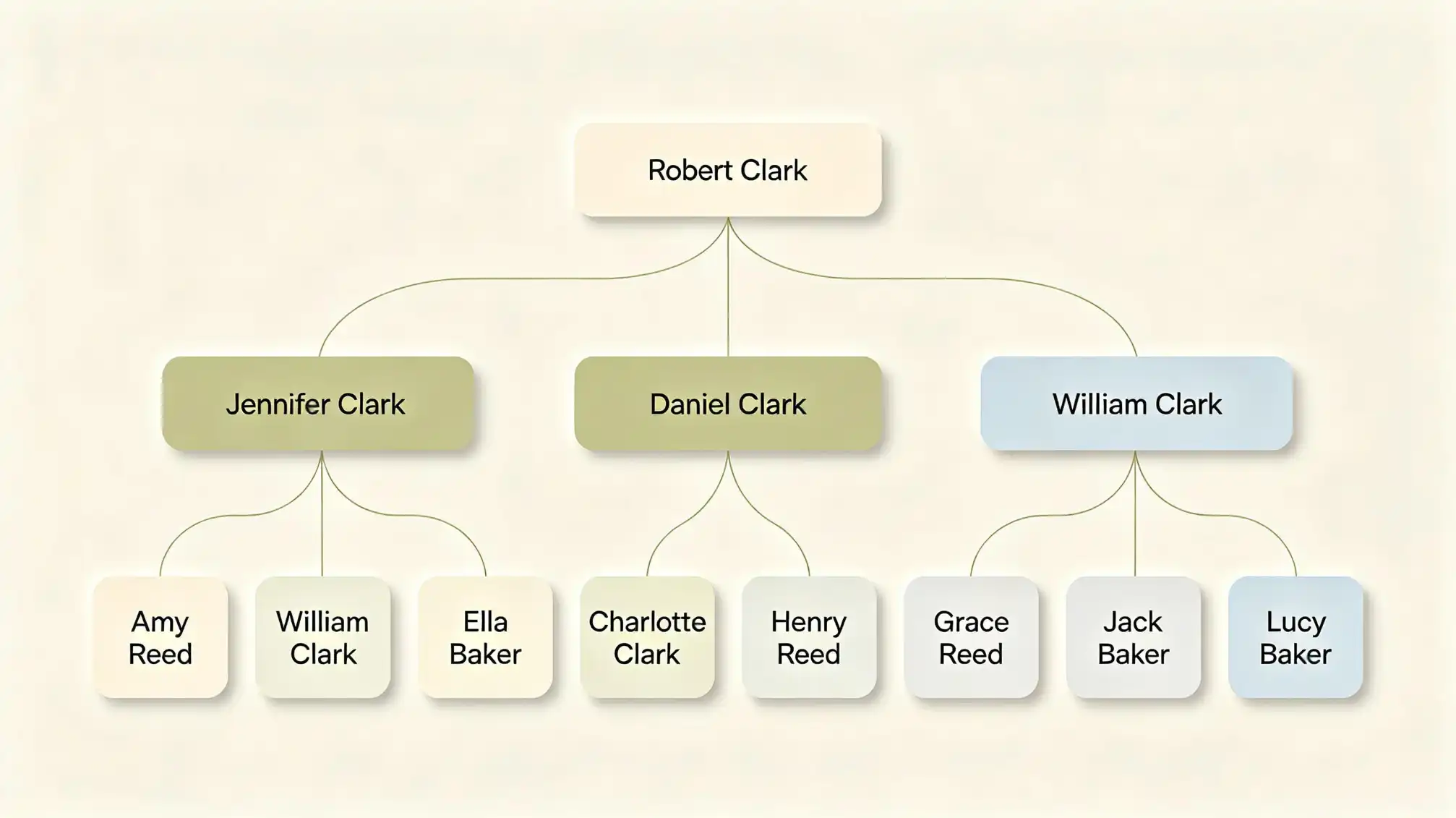
As your tree grows, keep your parents and grandparents as the anchor. They are the bridge between you and earlier generations, and their details are usually easier to verify. Once these core people are correctly placed, adding great-grandparents becomes a natural next step.
Step 4: Fill in the Gaps with Records
Memory is powerful, but it is also imperfect. Use public records to confirm the names and dates that you collect from family. Birth certificates, marriage licenses, census records, and obituaries can confirm a date or add a missing middle name. Start with local sources, then expand to state or national archives. Many libraries offer free access to genealogy databases, which is a huge help when you are busy.
When you find a record that contradicts a family story, write down the source and the date you found it. You do not have to correct the story in your family tree document, but you can add a note. This practice keeps your research honest and prevents future confusion. Over time, these records will also lead you to ancestors beyond your grandparents, making your family tree even more complete.
Step 5: Expand Beyond Grandparents
After you have confirmed the three generations you already have, look at the next level: great-grandparents and their siblings. Use the same interviewing and record-checking process. You will often find that mentioning your parents' and grandparents' names to older relatives unlocks a whole set of memories and photographs. This slow, careful expansion is how a healthy family tree takes shape.
Remember that every branch you add creates a richer picture of your relatives. You do not need to chase every surname at once. Focus on one side of the family at a time to avoid becoming overwhelmed. If you are just beginning to understand how your relatives connect, a simple vertical chart can be the easiest way to visualize your progress.
Keep Your Tree Alive
A family tree is not a one-time project. New babies, weddings, and even new discoveries mean it will keep changing. Set aside time every few months to revisit your chart, add new information, and prune any mistakes. Share your tree with family members and invite them to contribute. The more people who help, the more accurate and interesting your tree becomes.