How to Start a Family Tree Step by Step
Starting a family tree can feel like opening a door to a room full of old photographs, half-remembered stories, and questions you never knew you had. If you have never built one before, the process is easier than you think. You do not need to be a professional genealogist or have a basement full of documents. All you need is a starting point, a clear method, and a bit of patience.
Begin With What You Already Know
The best way to start a family tree is not with ancient records or online databases. It is with yourself. Write down your own full name, date and place of birth. Then move to your parents, your siblings, and your grandparents. Add as much as you can: nicknames, maiden names, birth years, and locations. This simple list becomes the foundation of your entire project.
Do not worry if your information feels incomplete. A family tree is a living document. You can always add missing details later. What matters now is capturing what you know while it is still fresh in your memory.
Interview Your Closest Relatives
Once your initial list is ready, talk to the people closest to you. Parents, aunts, uncles, and grandparents often hold pieces of the puzzle that no online record will ever show. Ask open-ended questions about where they grew up, who they remember from their childhood, and how certain family traditions started. Record the conversation or take detailed notes.
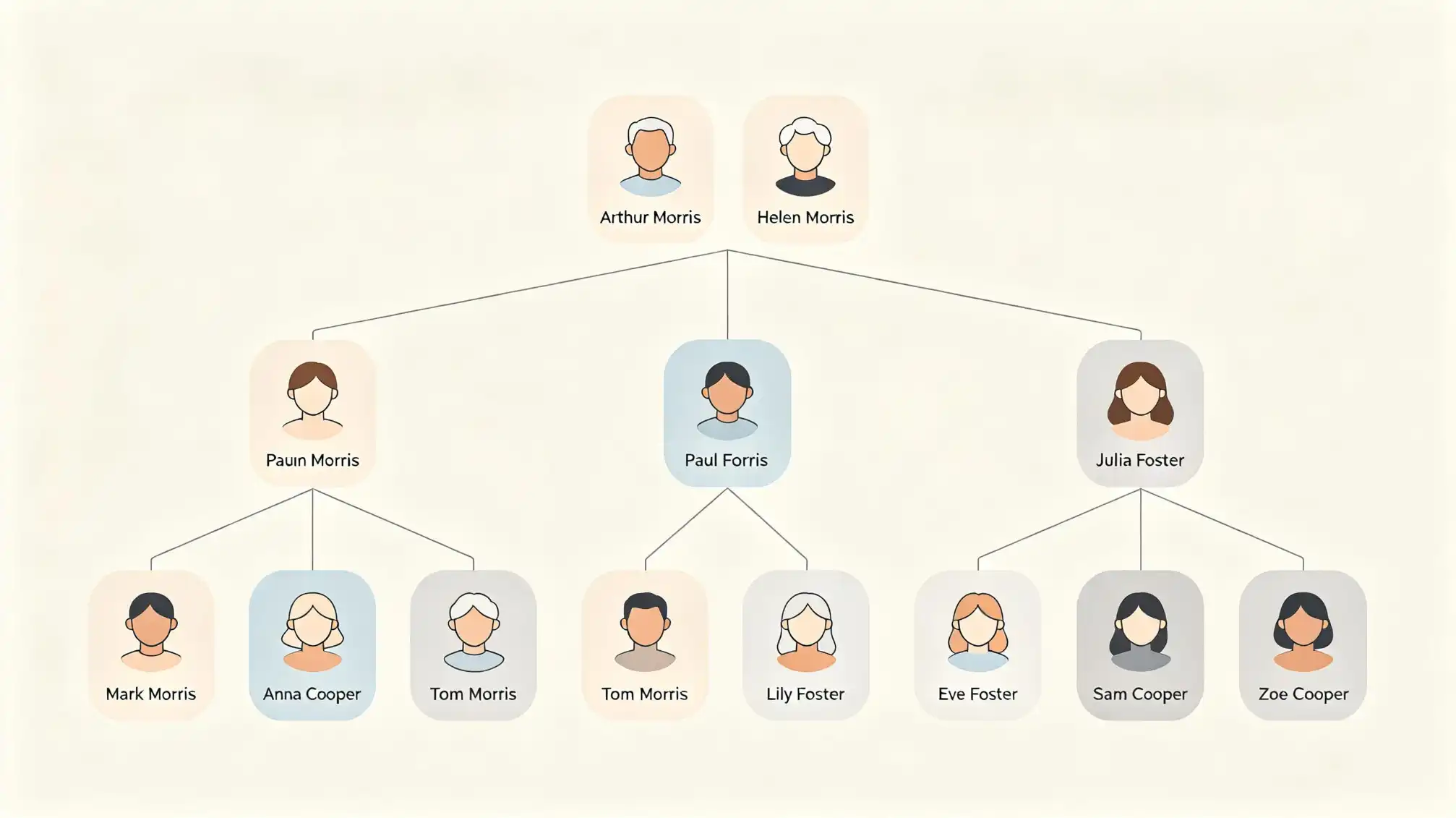
These interviews are not just about collecting data. They are about understanding the personalities, choices, and events that shaped your family. You will soon discover that every name on your tree has a story worth telling.
Choose a Simple Format That Works for You
Before you go further, decide how you want to record your family tree. There are three practical options for beginners:
- Paper chart: A printed family tree template is great for visual thinkers. You can hang it on a wall and fill it in with pencil as you learn new facts.
- Spreadsheet: A simple table with columns for name, birth date, death date, relationships, and notes works well if you like structure.
- Online family tree tools: Many websites offer free templates that automatically organize relatives and even suggest historical records.
No single choice is superior. The right format is the one you will actually use. If you enjoy handwriting, use a chart. If you like searching digital archives, choose an online tool.
Start With Your Parents and Grandparents
After documenting yourself and your household, move outward to your parents and grandparents. For each person, collect four key pieces of information: full legal name, date of birth, place of birth, and date of death if applicable. If your mother or grandmother changed their surname, record the maiden name as well. These details will become the anchors that connect you to official records.
Do not be afraid to ask relatives for documents. Birth certificates, marriage licenses, naturalization papers, and old family bibles are excellent sources. Even a handwritten note inside an old book can provide a missing clue.
Verify Facts Before You Add Them
One of the most common mistakes beginners make is accepting information without checking it. A family story may say that your great-grandfather came from Ireland, but the census record may show England. Always try to confirm new facts with at least two independent sources. An interview is a good start, but a public record or a dated photograph makes it stronger.
Be gentle with yourself and your relatives. Sometimes records conflict with memory. Write down what you hear, note the source, and keep investigating. Your family tree will be far more valuable if you can separate confirmed facts from family folklore.
Explore Public Records and Online Archives
Once you have a few generations established, you can expand your family history using public records. Census records, birth and death indexes, church registers, and military records are available in many national and local archives. Many of these are now digitized, which means you can search them from your own home.
When you find a record that matches a person on your tree, save a copy or note the record number. This gives you a reliable citation you can revisit later. It also helps when you share your research with other relatives who may ask, “How do you know that?”
Keep Your Family Tree Organized Over Time
As your tree grows, staying organized becomes just as important as finding new names. Create a simple file system on your computer or in a binder. Group documents by family line or by generation. Keep a running list of questions you still want to answer. Write down the date you collect every piece of information so you can track your own progress.
Remember that a family tree is never truly finished. You will correct mistakes, discover new branches, and perhaps solve a mystery that has puzzled your family for years. Enjoy the process and celebrate the small victories, like finding your grandmother’s maiden name or learning where your great-grandparents were married.
Share Your Findings With Family
One of the best reasons to build a family tree is to bring relatives closer. As you gather names and stories, share what you find. You can present a chart at a holiday gathering, send a digital copy to distant cousins, or simply talk about a new discovery with your parents. This not only keeps the project alive, but it also encourages others to contribute their own memories.
If your research touches on themes of connection, identity, or family bonds, you may find inspiration in the resources offered by FamilyLove. Visit the FamilyLove family hub to explore practical ways to strengthen your relationships while you discover where you come from.
Keep Going, Even When It Gets Hard
There will be moments when you hit a wall. A record may be missing, a surname may be spelled three different ways, or an elderly relative may not remember a crucial detail. That is normal. Even professional genealogists spend years on some branches. The key is to stay curious and flexible. Try a new spelling, search a different time period, or ask another relative for their perspective.
Your family tree is not just a list of names. It is a portrait of resilience, migration, love, and survival. Every person you add represents a life that helped lead to yours.