You probably know the important dates in your grandparents' lives—the birthdays, the anniversary, the year they moved into the house on Maple Street. But do you know why your grandfather always hums the same old song while washing the dishes? Do you know what your grandmother was thinking the first time she saw your grandfather across a crowded dance floor? That is the real grandparents family history. It lives in the details, in the jokes, in the quiet moments that never make it into a family tree.
There is something magical about sitting down with your grandparents and simply letting them talk. The stories that come out are not always accurate, and that's perfectly fine. Oral history is not about getting every fact perfect. It is about catching the spirit of a life, the way a person tells their own story, and the little side roads they take when they remember. The memories themselves are the family history.
Let the Small Things Lead the Way
You do not need a long list of formal questions to start a meaningful conversation. In fact, the best family history conversations usually begin with something small. A kitchen utensil, a photograph, a smell, a song. When you notice your grandmother reaching for the same blue ceramic bowl she has used for fifty years, ask her about that bowl. Where did she get it? What did she bake in it first? Who taught her that recipe?
These kind of open-ended questions work better than asking "Tell me about your childhood." They give your grandparents a concrete place to start. The memories will come flowing from there, often in surprising directions. If you let the conversation wander, you will discover things that no digital archive could ever capture.
Use Prompts, Not Interrogations
Sometimes it helps to keep a few family history questions in your back pocket. But think of them as gentle prompts, not a checklist. You are not conducting an interview. You are having a conversation with people who love you. Try prompts like these:
- "What was the best meal you ever had as a kid?"
- "Who was the first friend you remember making?"
- "What did your parents argue about—just a little?"
- "What is something you did as a teenager that you never told your own parents?"
- "What is the hardest lesson you learned that you hope we never have to learn?"
Notice how these ask for specific memories or feelings, not just facts. They open the door to stories about relatives, old neighborhoods, family traditions, and even the funny mistakes that everyone still recalls at every holiday dinner. Those family stories are worth more than any perfect pedigree chart.
Let Silence Do Some of the Work
Recording a conversation is helpful, but it can also make people nervous. If you set up a camera and start asking questions, your grandparents might tense up and give short answers. Instead, consider placing your phone on the table with the recorder running and then just letting the conversation flow naturally. Or, if your grandparent prefers no recording, simply take notes and write down their exact words later. The most important thing is to make them feel comfortable.
There will be moments of silence. Let them sit there. Your grandmother might be trying to piece together a memory from sixty years ago. If you jump in to fill the silence, you might cut off a beautiful story before it has a chance to surface. Patience is one of the best tools you have when you are collecting family stories.
Keep Notice of the Stories That Repeat
Grandparents often tell the same stories again and again. At first, you might be tempted to say, "Oh, I've heard this one before." But try not to. The stories that get repeated are usually the ones that shaped your grandparents the most. Pay attention to what parts they emphasize, what parts make them laugh or tear up. Those repetitions are clues to what they want you to remember about their lives and about the relatives who came before you.
You can also ask gentle follow-up questions about the repeated stories. "You always smile when you tell us about your cousin Rosa. What was she like when you two got into trouble together?" You might hear a new layer of the same story, and that layer can be even richer than the version you already knew.
Turn Your Conversations Into a Family Record
You do not need a professional studio to make a meaningful recording. A quiet room, a glass of water, and a phone are enough. Sit in a comfortable spot where your grandparents feel at home. Try to have natural light on their faces. Keep the recording going even when you are just laughing or flipping through an old photo album, because those in-between moments can be the heart of your grandparents family history.
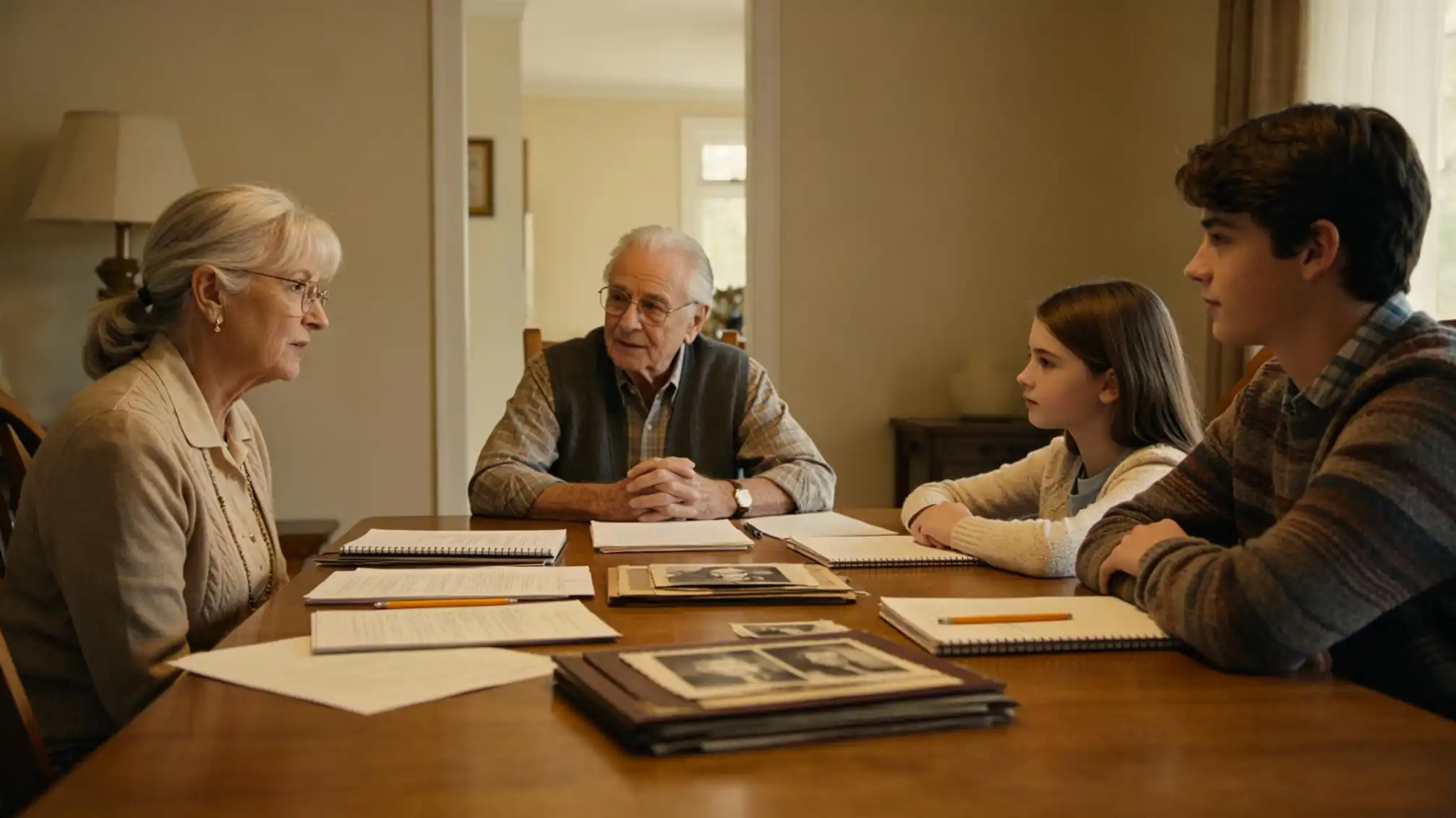
After the conversation, write down what you heard as soon as possible. Your memory will lose the details within a day or two. Jot down the names, places, and phrases your grandparent used. If you recorded the conversation, you can even transcribe a few key moments. Then start a folder—physical or digital—for all of your family history notes. If you need a little help organizing your notes, visit the family stories page on Family Love to see how others are preserving their relatives' voices and memories.
Don't Wait for a Big Occasion
Many families wait for a milestone—a ninetieth birthday, a big anniversary, a holiday with everyone together—to start talking about family history. But you do not need a special date. Some of the best conversations happen on a rainy Tuesday afternoon while you are folding laundry with your grandmother or taking a slow evening walk with your grandfather. Little everyday moments often feel safer and more relaxed. The stories tend to shine in those moments because the pressure is off.
If you are worried about where to begin, just show up with a cup of coffee and one small question. You do not have to record everything. You do not have to have a plan. The plan will grow as you go. The important thing is to show up, listen, and treat their lives as the treasure they are.
The memories you collect today will become the foundation of your family's identity for generations to come. The names on the family tree will have faces, voices, and stories. That is the real gift of grandparents family history. It is not about creating a perfect archive. It is about staying connected to the people who made you who you are.