What Genealogy Really Means
Genealogy is the study of family lines and the process of documenting how people are related across generations. It is more than a collection of names and dates — it is the reconstruction of the lives, migrations, occupations, and relationships of your ancestors. For beginners, the word genealogy can feel overwhelming, but the practice is deeply human and deeply rewarding. You don't need to be a historian to begin. You need curiosity, patience, and a simple system to guide your research.
Think of genealogy as a long conversation with the past. Every record you find adds a new voice: a census taker naming your great-grandparents, a ship manifest showing their voyage, a marriage register revealing a promise. Learning the fundamentals simply teaches you how to listen closely and how to ask better questions.
Start with What You Already Know
The best place to begin your genealogy journey is not inside a dusty archive — it is at your own kitchen table. Write down your full name, birthplace, birth date, and important life events. Then add your parents’ names, their birthplaces, and marriage details. Move backward one generation at a time. Using a paper chart or a simple software program helps. Many beginners make the mistake of skipping to online searches before organizing what they know. Starting with your own memories creates a solid foundation for a family tree that will grow and evolve.
As you fill in these early details, record where each piece of information came from. That memory of your mother’s birthplace may be accurate, but the source is valuable. Noting relative names, dates, and places early will save you time later when you begin matching records. Even a few notes can prevent confusion when two cousins report different versions of the same event.
Set Up a Simple Family Tree
A family tree is the visual heart of genealogy. For a beginner, a three-generation chart is the ideal starting point. Put yourself at the base, then add parents and grandparents. As you build upward, you will notice natural gaps — dates you don't know, middle names that are missing, or places you have never visited. Each gap becomes a research question. This turns genealogy from a giant mystery into a series of small, solveable puzzles.
You can use pen and paper, a spreadsheet, or a dedicated genealogy platform. The tool matters less than consistency. The important thing is to update your family tree as you discover new facts, and to always store your family history in a way you can return to years from now. Aclean tree gives you momentum and makes it easy to share your ancestors’ stories with relatives.
Make a Simple System for Sources
Beginner genealogists often collect many certificates and records, then lose track of which fact came from where. Creating a source system early avoids this problem. For every document or photo you find, note the title, date created, creator, and where you found it. Even a short description can help. For example: 'Marriage certificate of Sofia Rossi and Marco Bianchi, New York City, 1912, from the county clerk’s website.'
You can keep this information in a notebook, a spreadsheet, or a genealogy software application. The goal is to be able to trace any fact back to its evidence. This habit will make you a more confident researcher and will allow others to trust your family history work.
Interview Relatives Before It's Too Late
One of the most rewarding parts of genealogy is interviewing living relatives. Older family members hold memories that exist nowhere else. They can tell you stories about a grandmother’s accent, a grandfather’s occupation, or the neighborhood where the family first settled. Record the conversation with permission, or take careful notes. Ask open-ended questions like 'What do you remember about your grandparents?' and let the stories flow.
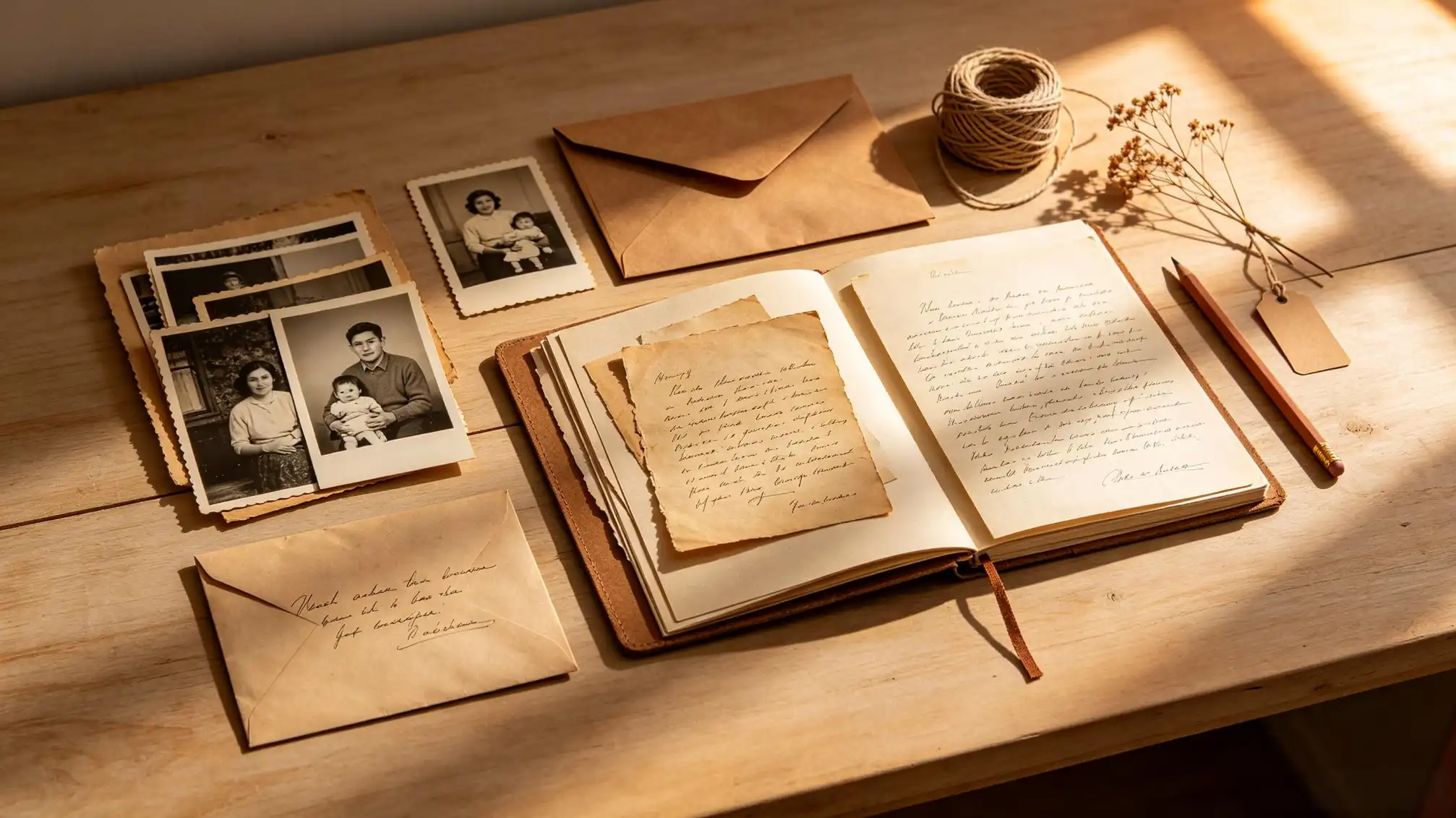
Interviews often produce clues that no document can match: a nickname, a physical description, a family saying, or the reason an ancestor changed their name. These fragments turn your family tree into a true family history. As you collect these memories, think about where they will live after the interview. A shoebox of photographs is a start, but a shared space makes the family history accessible to everyone. If you want to turn your interviews and precious photos into a lasting archive, consider sharing them on a dedicated family stories page at https://www.familylove.love/stories for future generations.
Use Online Databases and Local Resources Wisely
Online genealogy databases have made family research faster than ever. Search for your ancestors in census records, birth and death indexes, immigration lists, and military records. But remember that records are only as reliable as the person who wrote them. Spelling variations, transcription errors, and common names can lead you astray. Always search with wildcards and alternate spellings. If a record seems too good to be true, it often is.
Local resources can help when online tools hit a wall. County courthouses, libraries, historical societies, and churches often have records that are not digitized. A handwritten letter or a phone call to a local genealogical society can unlock a door that search engines cannot. Family history is built by combining online convenience with offline persistence. This balance will keep your genealogy research grounded and help you discover ancestors that others might miss.
Verify Your Family History Findings
Genealogy is more than filling in charts — it is about creating a trustworthy family history. Every new fact you add should be checked against the best available evidence. Try to find at least two independent records that agree on an important fact, such as a birth date or a parent’s name. This is the essence of the genealogical proof standard, and it is never too early to practice it, even for a beginner. When records conflict, make a note of the discrepancy and keep both versions in your files until one can be proven.
Source citations are your best friend. They may seem formal, but they make your research reproducible and credible. A good citation tells someone else exactly how to find the document again. This is what separates a solid family tree from a guessing game. By verifying each step, you honor the memory of your ancestors and pass down an accurate gift to the next generation.