Family History Questions That Bring Your Relatives’ Stories to Life
You don’t need a professional recorder, a genealogy subscription, or a perfect plan to start preserving your family’s past. You just need a few open-ended family history questions and the curiosity to keep listening.
Parents, grandparents, and other relatives are living archives. Their answers can reveal how your family survived hard times, celebrated small joys, and made decisions that shaped who you are today. The trick is to ask in a way that feels like a shared memory, not a questionnaire.
Why Family History Questions Work Better Than “Tell Me a Story”
When you ask someone “Tell me a story,” they often freeze. Stories are big. Memories are specific. Specific family history questions give your relative a gentle place to start.
Ask about a particular room, a favorite teacher, or a meal that only their mom made. You’ll hear details like the color of the kitchen wallpaper or the way the radio hummed. Those details are what make family history feel real.
The best approach is to treat the interview like a conversation over coffee. If you have a list of questions, keep it folded in your lap. Don’t read it like a script. Let your relative’s answers guide the next question naturally.
When and Where to Ask These Questions
Timing matters a lot. The best moments for family history questions are often quiet ones: after a holiday dinner, while flipping through an old photo album, or on a long car ride with a grandparent. Avoid times when people feel rushed or distracted.
A warm, familiar setting helps your relative relax. Many people open up more easily in their own kitchen than in a formal living room. You can also try walking together outside—side-by-side conversations often feel less intense than sitting face-to-face.
Openers That Feel Natural
Start with low-pressure questions that everyone can answer. Your goal is simply to get the conversation moving. Here are some family history questions that work well as openers:
- What is one thing you remember about your childhood home that I wouldn’t know?
- Who was your best friend when you were ten, and what did you do together?
- What did a typical Sunday look like in your house when you were young?
- What was the first song you ever loved?
- What is a smell or sound that instantly takes you back to your old neighborhood?
These questions are easy to answer and they invite detail. Once your relative starts smiling and remembering, you can gently move toward deeper territory.
Family History Questions for Grandparents About Their Younger Years
Grandparents often carry details from decades ago that even their own children have never heard. Use these questions to open the door to their past.
- What did your parents teach you about money when you were growing up?
- What did you want to be when you finished school?
- What was your first job, and what did you spend your first paycheck on?
- How did you meet the people you’ve known longest?
- What do you remember about the first time you rode in a car or saw a television?
Let pauses happen. Sometimes the deepest memories come after a quiet moment, not in the first sentence. If your grandparent says something like, “Oh, that’s not interesting,” gently encourage them. Tell them you really want to hear it.
Questions About Love, Family, and Life Choices
Some of the most meaningful family history questions go straight to the heart. They don’t need to be dramatic to be powerful.
- What was the hardest decision you ever made before you turned thirty?
- How did you decide to marry—or stay together with—your partner?
- What tradition from your childhood did you want to keep, or break, in your own family?
- What did you worry about that never actually happened?
- What is something you learned from a mistake that you never made again?
These questions can bring up strong emotions. Be ready to pause, listen, and show gratitude. You don’t need to fix anything. Your job is simply to honor their memories.
Questions About Family Customs and Ancestry
Not every family history question is about an event. Some are about the invisible glue that held everyone together: food, holidays, names, and language.
- Did your family ever use words or phrases that other people didn’t understand?
- What did your grandmother always cook that you’d love to taste again?
- Are there any family stories about how your last name was changed or preserved?
- What holidays did your family celebrate differently from your neighbors?
- Did any relatives come from another country? What did they bring with them?
These questions often uncover small cultural treasures. You might learn about a special dish, a song, or a saying that explains something you never understood about your family.
How to Listen and Record Like a Pro
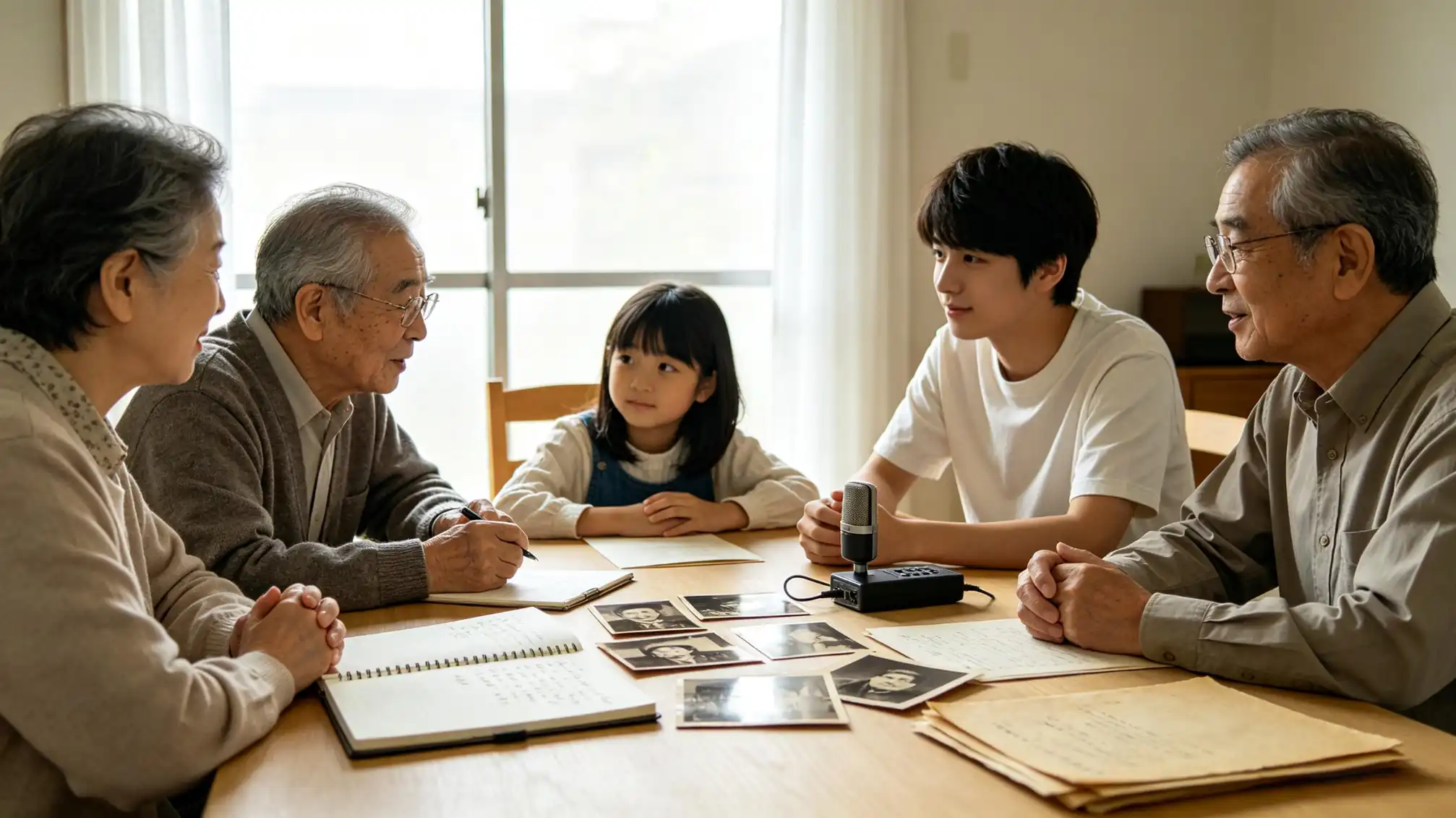
You don’t need an expensive microphone to capture these answers. Your phone’s voice memo app works fine. Just place it on a soft surface between you and your relative, and let the interview flow.
As you ask family history questions, resist the urge to correct or add details. If your mom says the wedding was in June and you thought it was July, let the story continue. You can verify dates later. The goal is to capture how they remember their own life.
Try to record with a simple pattern: a question, a pause, and a gentle follow-up like “What happened next?” That single phrase can unlock some of the best memories.
If you’re recording video, place the phone on a steady surface at eye level. You don’t need fancy lighting—natural light from a window is perfect. The most important thing is that your relative feels comfortable and unhurried.
Turn Your Memories into a Keepsake
Once you have an hour or two of audio, you can turn it into a family treasure. Write down the key moments, share the funny quotes, and add the photos that match. If you’re looking for a simple place to keep all those recollections, the story collection at FamilyLove Stories is a natural next step. You can upload short stories from your relatives and create a timeline future generations will enjoy.
Remember, the best family history questions are the ones that lead to more questions. You don’t have to finish everything in one afternoon. Start small. Ask one or two questions each time you visit, and you’ll be amazed at how much comes back.