Building a family tree is one of the most personal ways to connect with your past. Many people assume they must begin with old archives and distant ancestors, but the truth is simpler: the strongest roots start at home. By turning first to the people you know personally, especially your parents and grandparents, you create a solid foundation that makes every later discovery easier to place.
Why Parents and Grandparents Are the Perfect Starting Point
Your parents and grandparents are not just names at the center of a chart; they are living connectors to ancestors and relatives you may not yet know. They carry dates, places, and stories that cannot be found online. They also remember the context that turns a family tree into a family story, such as why a great-uncle moved to another city or how a grandmother learned to make a traditional dish. Capturing their memories before they fade gives your tree a human voice, not just a list of facts.
Because your parents and grandparents sit so close to you, they are also the most reliable first sources. They can correct a misspelled surname before it becomes a permanent error, and they can point you to a second cousin who has old letters. Focusing on them makes the project less overwhelming. Instead of trying to climb a massive mountain of ancestors, you build a small, sturdy bridge of three generations that you can expand once the bridge feels solid.
Begin with the Information You Already Have
Before picking up a blank chart, take a quiet hour to write down everything you already know about your immediate family. This is not a test; it is the raw material for your tree. Include:
- Your full name, birth date, and birthplace.
- Your parents' full names, including your mother's maiden surname.
- Your grandparents' names, or as many as you can recall.
- Approximate dates and places for births, weddings, and major moves.
This list does not need to be perfect. The gaps are not failures; they are your roadmap and the best questions for the next conversation. Seeing what you already know gives you confidence and shows exactly where your parents and grandparents can help.
Talk to the Generations Above You
Your parents and grandparents carry details that research alone cannot always provide. Ask open questions about daily life, family nicknames, favorite holidays, and the reasons behind important decisions. Then dig deeper: What do you remember about your own grandparents? Did any relatives come from another country? Were there family stories passed down about a special event or an old home?
Record the conversation on your phone if everyone agrees. A short talk with a grandparent can reveal the names of great-grandparents, a hometown, or a custom you had never heard of. Ask to see photo albums, old letters, family Bibles, and even recipe cards. Every document adds another layer to your family tree and makes your relatives feel more real.
Organize the Tree Around Grandparents
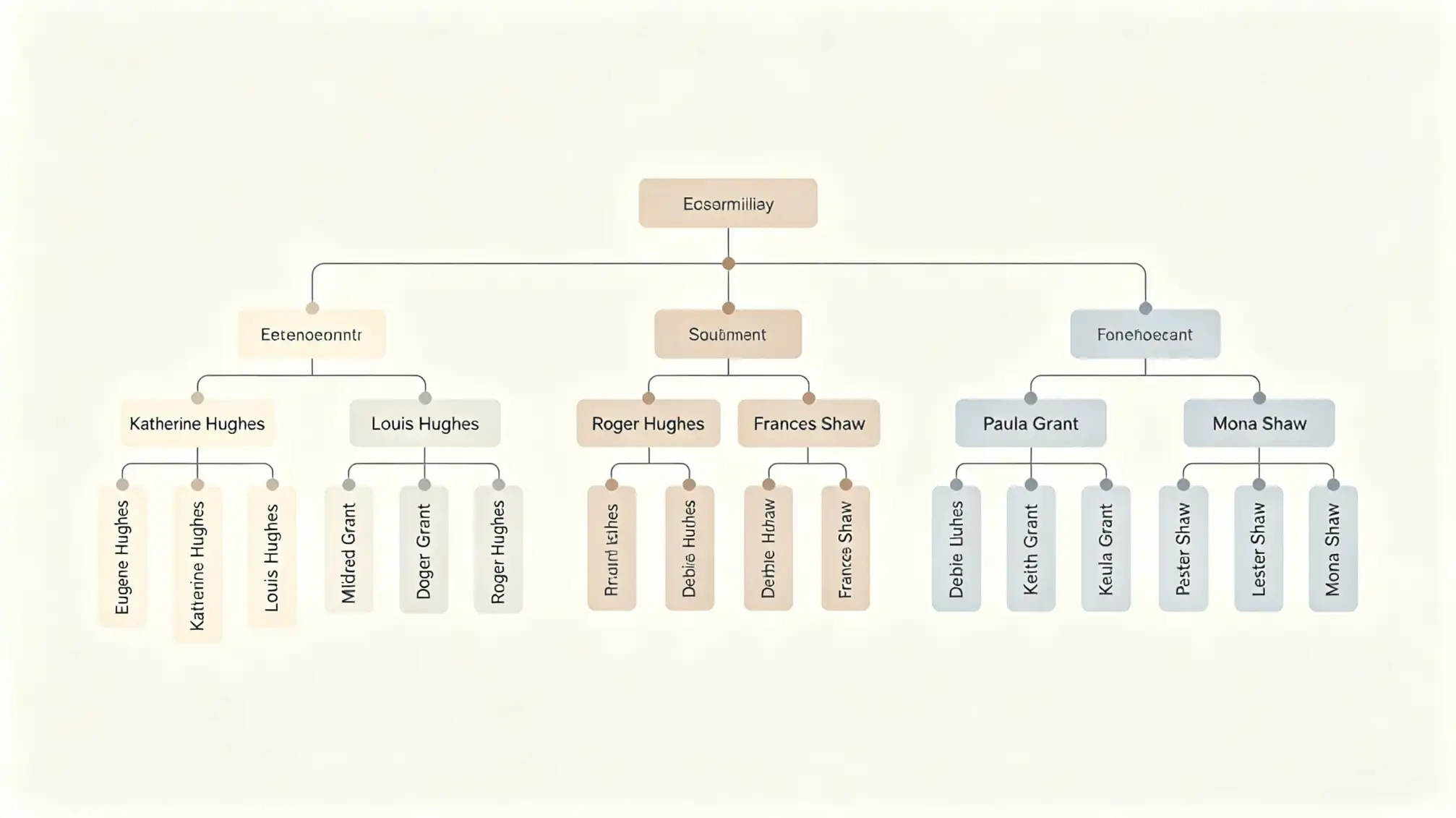
Once you have the basics, draw the tree so that each grandparent becomes the center of a small branch. This is a simple and effective method. Instead of climbing straight up one line, you build outward from each grandparent. List their spouse, their children, and their own parents. This reveals a natural hierarchy and makes it easy to see where information is missing.
Use a printed family tree template, a simple notebook drawing, or a private digital page. If you would like to keep the tree visible for aunts, uncles, and cousins, create a shared family page at FamilyLove Family Page. That way, relatives can add memories, upload photos, and correct details as the tree grows. A shared space also invites the quieter members of the family to contribute what they know.
Verify Each Branch Before You Grow It Higher
A family tree is only as reliable as its details. Check dates against official documents, old Bibles, wedding certificates, and obituaries. Ask a second relative to confirm a story or a maiden name. Small mistakes, such as a misspelled surname or the wrong year, multiply as you add more ancestors. When in doubt, pencil it in; treat a suspected fact as a clue until you can verify it.
This step matters more than people realize. A single family tree can be shared by dozens of relatives, and an unchecked date can create confusion for generations to come. By keeping your research clean and careful, you give future descendants a gift they can trust.
Use a Simple System to Keep Track
As your family tree grows, you will need a simple system to stay organized. Label every note with the person's full name and the source of the information. Keep a separate folder for each grandparent line, especially if they come from different towns or countries. Use color coding to show which branches are fully confirmed and which are still waiting for evidence.
You don't need complex software to begin. A binder with dividers, a spreadsheet, or a basic online tool can all work. The most important habit is consistency. Add dates as you learn them, and always record where the information came from. This small discipline will save you hours when you decide to explore older ancestors later.
Take the Next Step Toward Ancestors
After your parents and grandparents are recorded, you are ready to move upward. Each grandparent connects to two great-grandparents, so once you have four grandparents, you already have a path to eight great-grandparents. Search public records, census lists, and regional archives with the names you gathered. Add one generation at a time, and always label how you are related to each person.
Remember that a family tree includes relatives beyond the direct line. Add aunts, uncles, and cousins while the memories are still fresh. Their branches make your tree more complete and give descendants a richer picture of family life. You may also discover cousins who share your great-grandparents, and those connections can become treasured relationships.