Starting a family tree can feel like standing at the bottom of a mountain. Where do you begin? With a grandparent's maiden name? A box of old photographs? A half-remembered story about an uncle who once lived abroad? The truth is, the best family tree starts not with a database, but with what you already know. This guide will show you how to build a family tree that is accurate, meaningful, and sustainable—without getting lost in genealogy jargon or spending hours on dead-end searches.
Begin With the Family Tree You Already Carry
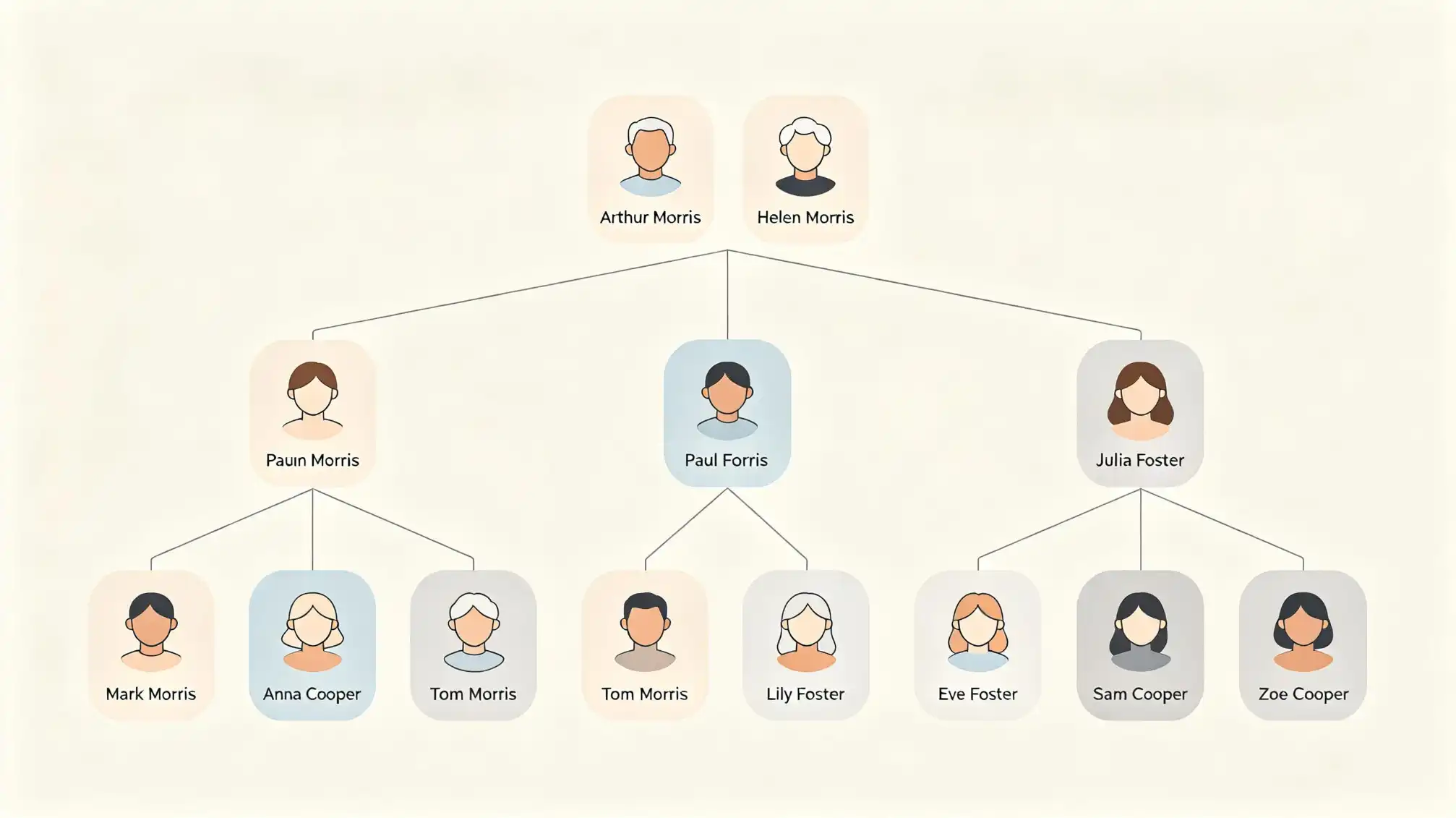
Every family tree has roots, but yours begins in the present. Before you open any website or visit an archive, take a blank sheet of paper and write down the names of your parents, siblings, grandparents, and the relatives you know. You might be surprised how much information you hold in memory: aunts, uncles, cousins, nicknames, birth towns, holiday traditions, and even the names of family pets that anchor your childhood stories. This first pass is not about perfection. It is about drawing a rough map of your family history that you can refine later.
Turn Memories Into Questions for Relatives
Once you have written down what you know, a curious thing happens: you start noticing gaps. Maybe you know your grandmother's maiden name but not her parents' names. Maybe your father remembers his uncle's nickname but no one knows the uncle's full first name. These gaps are not failures; they are invitations. Your next step is to talk to the living relatives who can fill them in. Call, video-chat, or sit down with older family members and ask open-ended questions. Record the conversation on your phone—with permission—or take notes. You will discover that family history is not just a list of it is a collection of memories, personalities, and decisions that shaped who you are.
Use a Simple Format That Works for You
You do not need fancy software to start a family tree. A spiral notebook, a spreadsheet, or a free online template all work well in the first weeks. The goal is to keep your information organized and easy to update. Create columns for each person: full name, date of birth, place of birth, date of marriage, date of death, and a notes column for interesting stories or unresolved questions. When you learn a new fact, add it immediately. When you confirm a detail with a second source, mark it as verified. This habit will save you from confusion later, especially when you encounter common names or overlapping dates.
Verify Before You Add Branches
One of the biggest mistakes beginners make is copying information from public family trees without checking it. A family tree that is full of unverified names is like a house built on sand. Before you add a person, try to confirm the information with at least two independent sources: a relative's memory, a birth certificate, a census record, a marriage license, a funeral program, or even an old family Bible. When sources disagree, write down the discrepancy in your notes. Your future self will thank you for not erasing mysteries too quickly.
Let the Forest Guide Your Next Steps
As your tree grows, you will start to see patterns. Maybe several branches of your family settled in the same county for generations. Maybe there is a repeated first name that appears every few decades. Maybe a great-grandfather's occupation appears in census records again and again. These patterns help you decide where to research next. Instead of chasing every possible ancestor, follow one promising line at a time. Finish a small branch completely—from known descendants back to their immigrant ancestor or distant ancestor—before jumping to another. This focused approach makes your family history feel achievable.
Connect Your Tree to the People Still Alive
A family tree is more than a historical document; it is a bridge between the living and the past. As you gather stories, share them. Send a copy of the tree to a cousin. Ask a grandparent to confirm the spelling of a maiden name. Let younger relatives see that they belong to a longer story. If you want to take this a step further, visit the Family Love family page to find practical ways to engage your wider circle of relatives and turn your tree into an active, living network.
Keep Your Family History Human
Dates and places matter, but they are not the whole story. When you add a person to your tree, jot down one or two details that make them feel real: a favorite recipe, a talent for carpentry, a stubborn streak, a joke they always told. These small, human touches turn a bare chart into a true family history. They also make the research process more enjoyable. You are not chasing records; you are honoring people.
Set a Realistic Research Rhythm
Building a family tree is a marathon, not a sprint. Decide how often you want to work on it. Some people enjoy a half-hour every Sunday afternoon; others prefer a dedicated weekend once a month. Consistency matters more than intensity. Create a simple checklist for each session: review any new records, follow up with a relative, update your tree, and write down the next question you want to answer. This rhythm keeps your project alive without making it feel like homework.
Use Online Tools Without Losing Your Focus
Online genealogy databases can be powerful allies, but they can also overwhelm you with hints and suggestions. Remember that every hint is a possibility, not a fact. When the site suggests a new ancestor, look at the source behind the suggestion. Is it a scanned original record? A transcription made by a volunteer? An unsourced family tree submitted by another user? Use the records to support your own research, and keep your own tree as the clear single source of truth. This will protect you from copying errors that are common in shared online trees.
Celebrate Small Wins Along the Way
Do not wait until your tree has five hundred names to feel proud. Celebrate small successes: discovering a grandmother's hometown, finding a great-grandfather on a ship manifest, or simply confirming that a family legend about an ancestor's occupation is true. Each of these moments is a brick in the foundation of your family history. Share your discoveries with family. You will find that your enthusiasm becomes contagious, and relatives who were hesitant before may suddenly want to share their own memories.
Make Your Family Tree a Shared Project
Family history is naturally collaborative. You may have a cousin who knows the family recipes, an aunt who keeps the old photographs, or a grandparent who remembers the names of long-gone neighbors. Invite them to contribute. If they are not comfortable with technology, ask them for memories over the phone and write them down yourself. Create a shared folder for scanned documents and photos. The more people involved, the richer the tree—and the less work falls on your shoulders alone.