Every home has a heartbeat. It lives in the kitchen-table conversations, the hallway gallery of family photos, and that one box of mismatched keepsakes nobody can throw away. Preserving family memories is not about having a perfect archive—it's about weaving family history into the spaces where we already gather. With a little intention, your shared family space can become a living storybook that everyone helps write.
Choose One Wall That Tells Your Story
Pick a wall, shelf, or cabinet door in a room your family uses every day. You don't need a large space or expensive frames. A wire with clothespins, a few magnetic frames, or a simple corkboard works beautifully. Let every person pin up something meaningful: a ticket stub, a school drawing, a postcard, and your favorite family photos. Change the display with the seasons, birthdays, or holidays. When family memories are visible, they invite conversation. Children start asking questions, and parents start telling the stories behind each object. That is how family history begins at home.
Print Family Photos and Add the Story Behind Them
Most of our best family photos stay hidden on phones and hard drives, rarely seen. Choose just five to print each month. Add a small handwritten note on the back or a card beside the frame: "Hannah and Diego, first beach day, June 2021." This small habit keeps family photos connected to the people and moments they represent. You can also create a simple photo basket. Drop one printed picture inside each week, then pull one out at dinner and ask, "Tell me about this photo?" It's an easy, lovely way to share family memories across generations.
Create a Shared Digital Home for My Family History
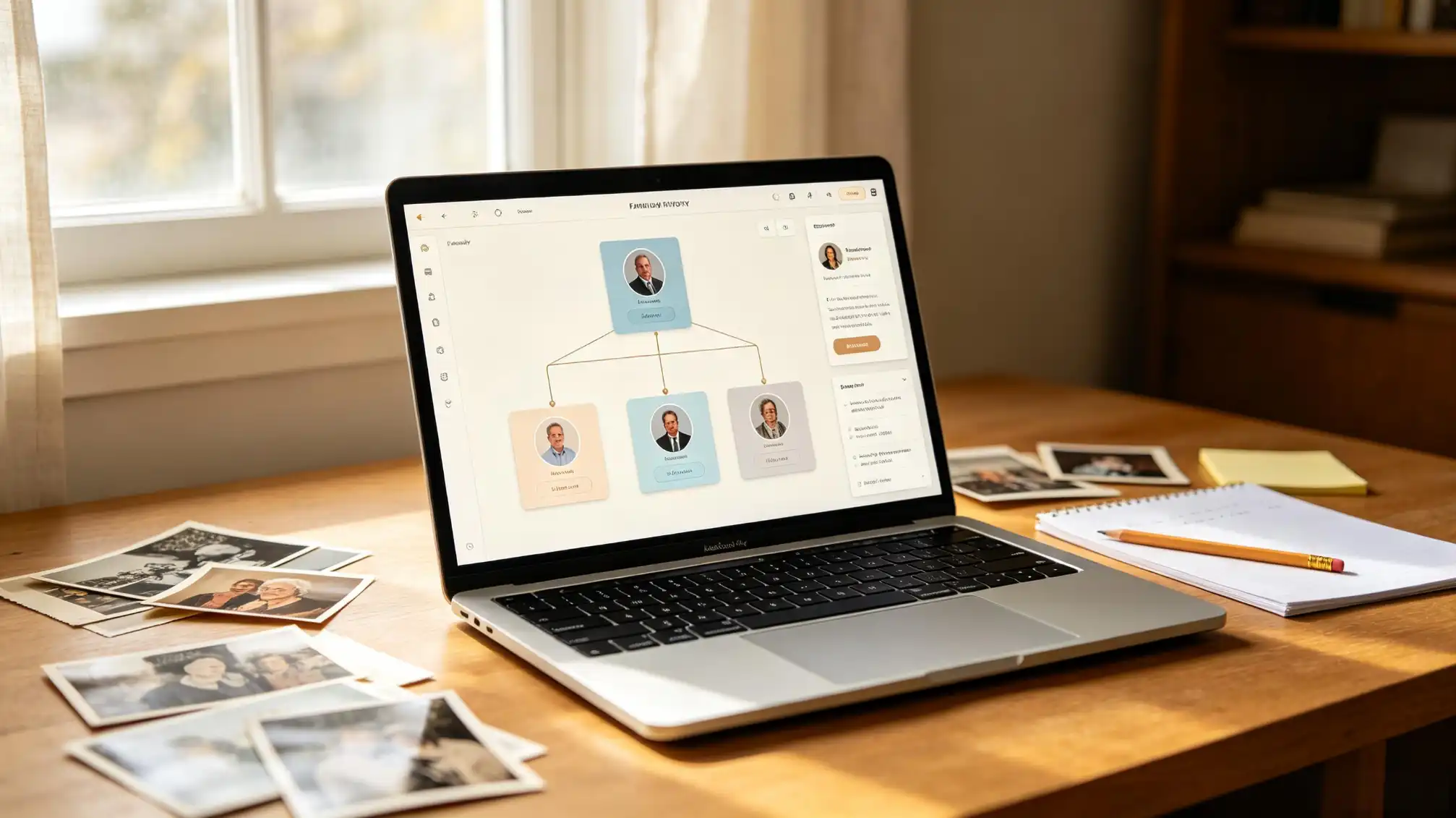
If your family is spread across different cities—or just wants an easy backup—a shared digital space can hold your family history. Create a private album or a family group and invite relatives to post their favorite pictures. Scan older photographs, letters, and recipes, then store them in a folder called "My Family History." You can also build a shared family tree on a laptop, the kind your kids can add to as they interview grandparents. Need a little inspiration? Visit our family stories collection and see how other families keep their own memories alive in practical ways. Use those examples as a springboard for your family archive.
Make Memory-Keeping a Monthly Ritual
You don't have to wait for weddings, reunions, or big anniversaries to preserve family memories. Pick one evening each month for a family memory hour. Make it cozy: set phones aside, bring out the photo box, and let everyone choose one memory to share. Record grandma telling an old recipe, ask dad about his first job, or let the kids retell the funniest moment from last summer. These recordings may feel small now, but in ten years they will be treasures. The shared family space becomes a place where the past and present meet—even on a regular Tuesday.
Give Every Generation a Voice
Children are natural historians when we let them lead. Give each child their own small memory box or a shelf in the shared space. Let them decide what to save—a ticket, a pressed flower, a friendship bracelet—and help them write the story. Encourage them to interview grandparents and great-aunts with a simple list of questions. These conversations are some of the most meaningful ways to pass down my family history. Not every memory needs to feel significant in the moment; the ordinary moments often become the ones we love most. With time, these small practices become a lasting family tradition.