Every family has a treasury of voices, choices, and quiet moments that shaped who you are today. But recording family history can feel like a massive project when you imagine all the names, dates, and branches waiting to be uncovered. The truth is, it does not begin with a perfect archive or an endless spreadsheet. It begins with a simple decision to become the keeper of your family's stories, and then taking one small step at a time.
Start Before You Research
The most natural place to begin recording your family history is not in a library or on a genealogy website. It is inside your own memory. Before you ask anyone else, sit down with a notebook and write down the moments you remember most clearly. What did your grandmother's kitchen smell like on Sunday afternoon? What phrase did your father repeat when you were nervous? What is the first story you remember being told about your great-grandparents?
These small impressions are the emotional backbone of your family history. Names and dates are important, but they become meaningful only when wrapped in the texture of everyday life. By starting with your own memories, you are also practicing the same skill you will use when interviewing relatives: noticing details, listening for feeling, and trusting that no memory is too small to preserve.
Capture the Stories Behind the Names
Once you have written down a few of your own stories, you are ready to collect other voices. Many people postpone this step because they worry about recording equipment, awkward silences, or family members who say they have nothing interesting to say. Set those worries aside. A phone or a handheld recorder is enough. The real technology you need is a genuine question and the patience to let the answer unfold.
Begin with relatives who are older and whose memories may feel most fragile. Ask open questions like, What was life like when you were my age? or Who was the person who influenced you the most when you were young? When a conversation drifts, let it drift. Some of the richest family stories appear on the winding path away from your original question. Keep a list of prompts nearby, but allow silence to give the other person room to reflect.
After each conversation, write a short summary of the key moments and feelings. If you recorded the session, note the timestamps of your favorite passages so they are easy to find later. These recordings are more than research material. They are the sound of your family's laughter, pauses, and beloved phrases, waiting to be heard by future generations.
Build Your Family Tree as a Map, Not a Destination
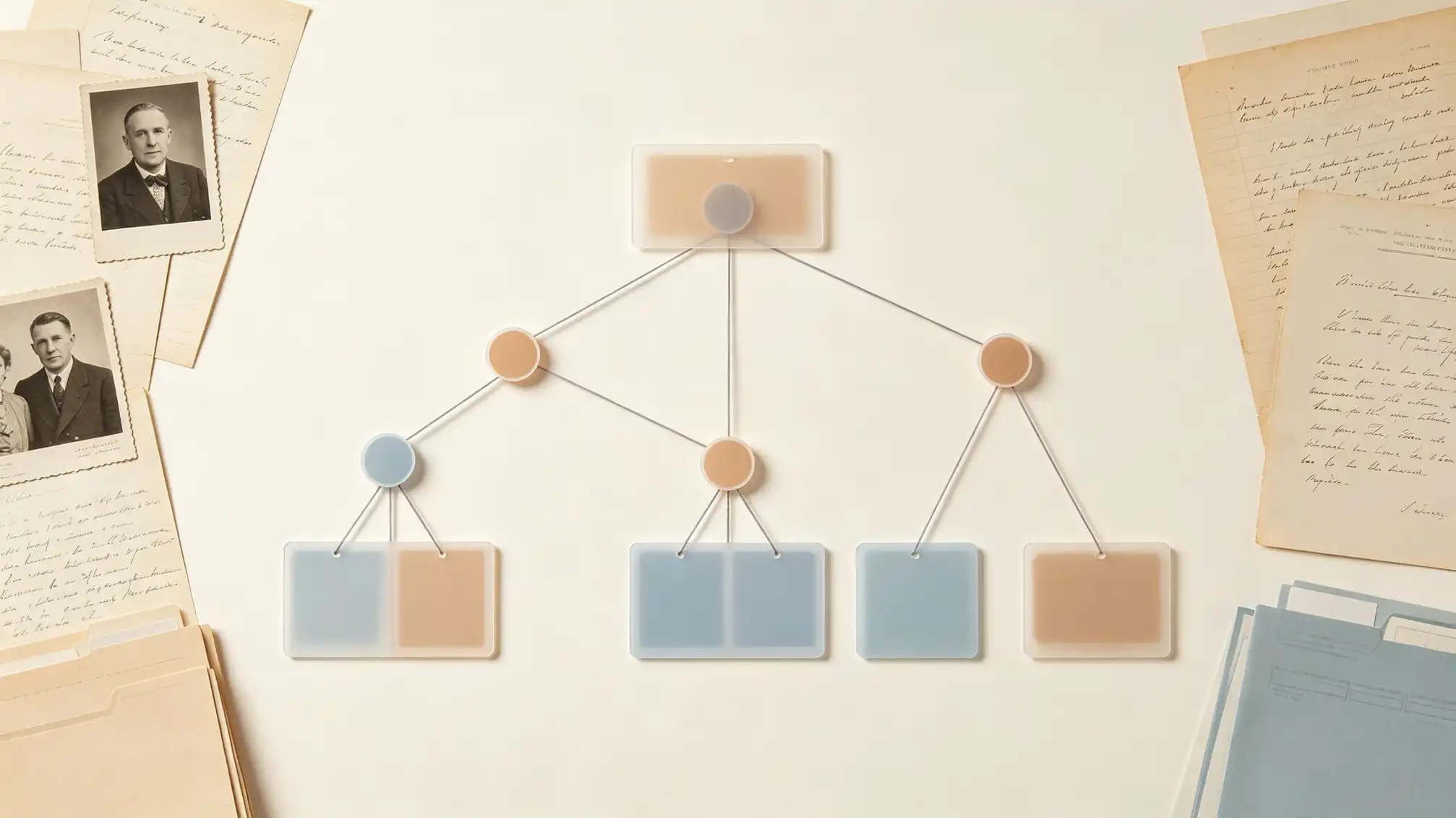
Many people begin their family history journey by drawing a family tree, but they quickly feel overwhelmed by gaps, conflicting records, and the sheer number of ancestors. Reframe this exercise. Your family tree does not have to be complete to be beautiful. Think of it as a living map that grows with each conversation you have and each document you find.
Start with yourself, then your parents, grandparents, and great-grandparents. Fill in birthplaces, professions, and any dates you already know. Leave space for notes: moved to Pittsburgh in 1927, worked as a riverboat cook, never talked about the war. These annotations turn a static chart into a doorway to further questions. When you speak with relatives later, you can ask about the places and roles you have mapped out, and they will often fill in the spaces with surprising detail.
Online records and archive indexes are useful, but do not let them replace human memory. A birth certificate gives you a date; a cousin can tell you that this ancestor was terrified of thunder and always hummed while baking bread. Both belong in your family history. Over time, your tree will become a collection of names enriched with stories, and that is exactly what a meaningful heritage looks like.
Preserve the Everyday Details
After a few conversations, you will likely notice that the most vivid moments are not grand historical events. They are sensory details: the pattern on a favorite dress, the nickname shouted across a street, the jelly jar used for drinking water, the way a grandparent pronounced a certain word. These details are the soul of your family story archive.
Make a conscious effort to record the everyday. Ask about small rituals and household rhythms. What did the family eat on cold evenings? Where did children sit when they did homework? What song was always humming in the background? If an object has been passed down, even a simple spoon, ask about who used it and why it survived. These improvised daily moments often reveal more about a family's values than any official document.
Collect recipes, letter fragments, and ticket stubs if they come your way. Photograph the inside of a family Bible even if the cover is worn. Scan old postcards and label them with the handwriting style or the story behind the message. Your goal is not to turn your home into a museum, but to create a small, reliable space where future generations can touch the texture of the past.
Turn Fragments into Family Stories
As your notes grow, you may feel the need to shape them into something more polished. That is natural. Family history does not have to remain a list of scattered anecdotes; you can weave them into short written pieces that honor each relative's voice. Choose one person and write a one-page portrait. Begin with a favorite memory, then move into background, and end by reflecting on the meaning of that person's life in your own.
You do not need to be a professional writer. Use simple language and let the facts speak for themselves. If you are unsure where to begin, try reading your interview notes aloud and writing down the phrases that feel most alive. Those phrases are often the seeds of a moving family story. You can also share your growing collection with relatives and invite them to correct details or add their own memories. This collaborative process makes everyone feel like part of the archive you are building.
If you are not yet ready to write full narratives, simply organize your recordings and notes by branch of the family. A clear structure will help you feel more confident and make it easier to pick up the project after a break.
Share Your Progress
Recording your family history is an act of love, but it becomes even more powerful when shared. As you gather more stories, consider making them visible to the people who matter most. The family stories section on FamilyLove is a thoughtful place to start, because it offers a space for preserving and celebrating narratives with a warm, relational focus. You do not have to wait until your collection feels complete to share it. A handful of family stories, posted and honored, can inspire others to contribute their own chapters.
Sharing early also builds momentum. When relatives see that you genuinely value their memories, they often unlock deeper recollections. The simple act of sending a recording to a distant cousin can trigger a new round of memories that would otherwise remain hidden. Your openness becomes an invitation for everyone in the family to participate in remembering.