You have an old shoebox of photographs, a few handwritten names on the back, and the same question: where do you start? A family tree template is the answer. It gives you a simple grid to organize what you already know, and it shows you where the gaps are. You don’t need special software or a genealogy degree. You just need a template, a few records, and a plan to turn scattered names into a family story you can pass down.
Why a Simple Family Tree Template Beats Fancy Software
It is tempting to jump into a full-featured genealogy program. But those tools often ask for source citations, media files, and data fields before you have even found your grandmother’s maiden name. A free family tree template keeps the process human. It lets you see the whole tree at a glance, draw connections quickly, and add details later without getting lost in menus.
A template also helps you avoid a common mistake: filling in every box before you check the facts. When the page is clean and simple, you are more likely to ask, “Wait, do I actually know that date?” That is a good thing. It slows you down at the right moments and speeds you up when you are confident.
What You Need Before You Fill in the Template
Before you open a family tree template, take fifteen minutes to gather what is already at hand. You do not need to visit a courthouse or order a DNA kit. Start with your own home:
- Birth and marriage certificates from parents or grandparents
- Old letters, diaries, or printed obituaries
- Photo albums with names or dates on the back
- Military records, cemetery cards, or family Bibles
Place these in a single folder, even if they are just phone scans. The point is not perfection. The point is to build a small pool of information you can trust. When you have that pool, the template becomes a container for what is real.
How to Structure Your Family Tree Template
Most tree templates start with you or the oldest known ancestor in the center, with branches for children and parents. If you are using a free family tree template, choose one that has vertical lines for three to five generations. A template that forces you to squeeze names into tiny boxes will frustrate you. Look for a layout with room for:
- Full name, not just a nickname
- Birth date and place
- Marriage date, if relevant
- Death date and place
- A short line for notes or a life story
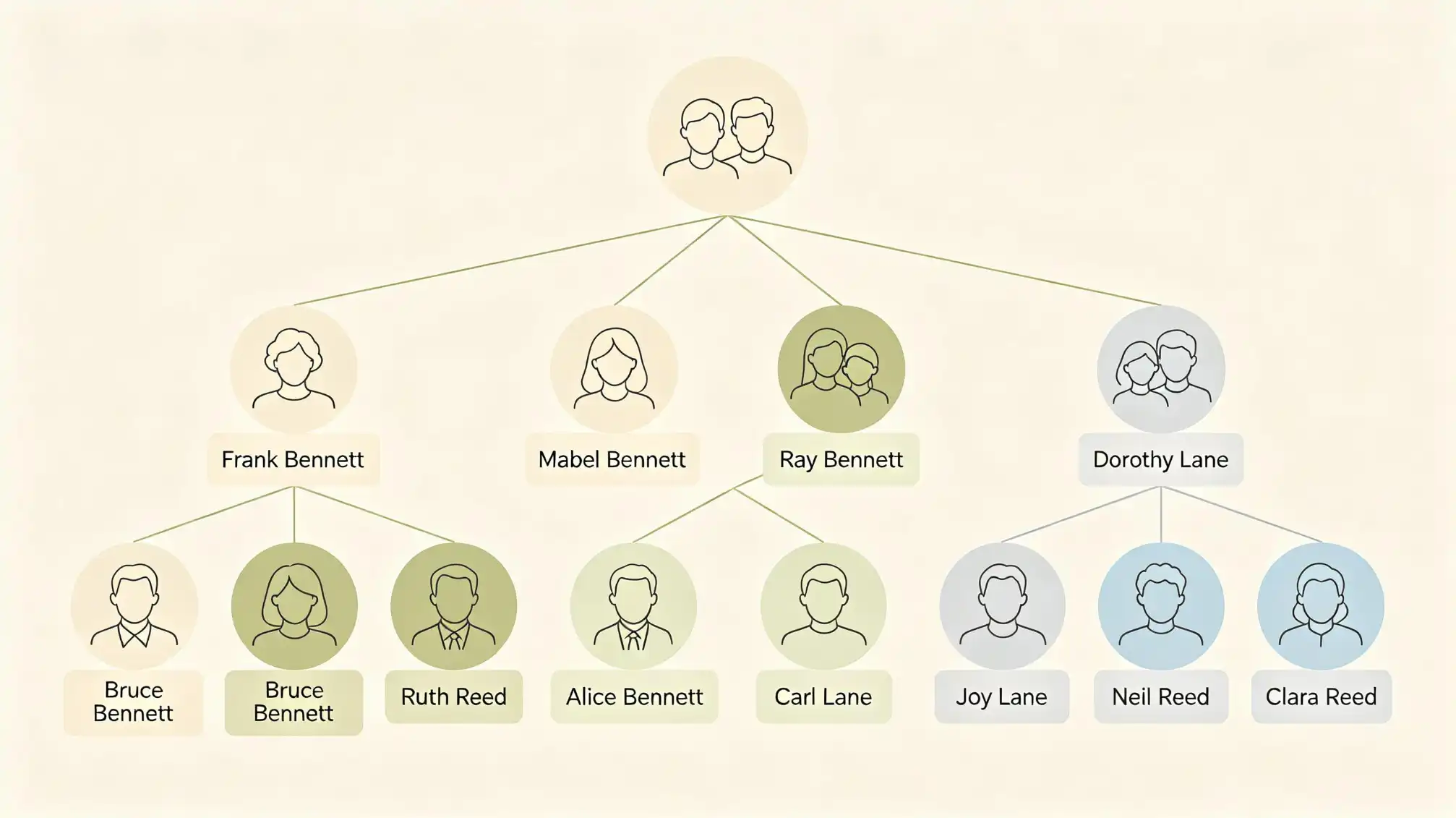
When you place a name in your family tree template, think of it as a promise to fact-check later. Write a small question mark next to anything you are not sure about. This is a practical habit that saves you from passing on a family myth as fact.
Use a Free Family Tree Template to Start Fast
You do not need to buy a printed poster or subscribe to an expensive service. A free family tree template is enough for your first pass. Print it out and use a pencil. That might feel old-school, but it is actually a smart way to work with a family history template. Pencil lines are easy to erase when you discover that Uncle Joe was born in 1942, not 1944.
As you work, you will notice that some branches are full while others are mostly blank. That is normal. Let those blank spaces guide your next research session. For example, if your mother’s side has only her name, ask a family member about her parents. People are often more willing to share stories than you expect.
Keep Your Family History Template Alive with Stories
A family tree template becomes a dry list if you only write names and dates. Add short stories in the margins or use a separate notebook for memories. Here are a few ways to make the record feel human:
- Write down one favorite memory next to each grandparent
- Note the town where a family member ran a bakery
- Add a holiday tradition that came from a specific ancestor
- Include names of places even if you do not have exact dates
These details are what your children and nieces will remember. The genealogy is the skeleton; the stories are the heartbeat. You can also connect your family tree to a broader family relationships page for more context on how to preserve these connections. Visit the family section here for thoughtful ideas on keeping relatives close.
Keep Your Research Organized with Sources
Every time you add a name to your family history template, write a tiny source code next to it. It can be “Mom’s memory” or “Census 1930” or “Family Bible.” This does not need to be formal. It simply tells your future self where the information came from. When you merge your tree with a cousin’s research, those small codes will save you from a mess of contradictions.
If you are using a digital family tree template, create a separate document for copies of records. Name each file with the person’s last name, first name, and year. That way you can always find the proof behind the chart.
Share Your Family Tree Template with Others
Once you have a few generations filled in, share your family tree template with relatives. Ask them to check dates and add memories. You will be surprised by what they remember. A simple way is to send the printed page in the mail, or share a scanned copy over email. Some relatives will embrace a free family tree template on paper; others prefer a shared online document. Use whatever lowers the barrier.
When family members start talking, you will collect new names, nicknames, and corrections. Add those updates to your template right away. If you wait, the details blur and you will lose the momentum.
Do not worry if your family tree template is not “complete.” No family tree is ever truly finished. There is always another cousin, another old photograph, another census record. The goal is to keep moving forward without losing the truth you have already gathered.