Begin Where Your Family Lives: Three Generations
If you have ever wondered how to build a family tree, the best answer is often closer than you think. Instead of starting with distant ancestors or complicated records, begin with your parents and grandparents. A three-generation family tree gives you a strong foundation, meaningful stories, and a natural path back through time. This small tree is also a doorway to your wider circle of relatives, because every interview and every document connects to someone new.
Many people feel pressure to include every branch at once. That pressure can make the process feel overwhelming. A focused approach works better. By limiting your first tree to parents and grandparents, you can complete a reliable chart quickly and then expand with confidence.
Set a Simple Goal Before You Begin
Before you open a notebook or search the internet, decide what success looks like. For this project, the goal is to create a clean three-generation chart: you, your parents, and your grandparents. You can also add the siblings of your parents if that helps you understand the family better. Keep your early scope small. A finished chart with four grandparents is more satisfying than an unfinished wall of five hundred names.
Set aside a weekend, or even a couple of afternoons, for this first stage. Family members are more willing to share memories when they know the request is focused and respectful. Later, you can widen the door to include aunts, uncles, cousins, and ancestors.
Gather Names, Dates, and Places First
Every family tree is built on a handful of core facts: full name, date of birth, marriage date, and place of residence. For parents and grandparents, these details are usually in your family's memory, but memory is not always exact. Write down what you know before you ask for help, then look for ways to confirm it.
- Full legal names, including middle names
- Dates of birth, marriage, and if applicable, death
- Birthplaces and hometowns
- Religious, military, or community milestones
- Names of siblings and cousins who might have older records
Do not worry about gaps. A blank space on your chart is not a failure. It is a question mark that will guide your next conversation with a parent, grandparent, or relative.
Ask Questions That Encourage Stories
Names and dates are only part of a family tree. The stories behind those facts give life to your chart. When you sit down with your parents or grandparents, ask open-ended questions such as “How did your parents meet?” or “What was the family home like when you were small?” These questions often unlock answers about relatives who may have been only names before.
Record the conversation if everyone is comfortable. A simple voice memo on your phone is enough. Later, you can type out the key details and add them to your family tree notes. Stories also reveal relationships, nicknames,and old patterns that official documents miss.
If a parent or grandparent seems unsure, break the question into smaller pieces. Instead of asking “Who is that in the photo?”, ask “What do you remember about the day this photo was taken?” Smaller questions are easier to answer and often produce richer detail.
Bring inthe Documents That Confirm Your Tree
Once you have a provisional chart, search for supporting documents. Your parents and grandparents likely keep important papers in drawers, albums, or safe boxes. Birth certificates, marriage licenses, and old letters are excellent sources. Even a family Bible with handwritten dates can settle a disagreement or add a missing middle name.
If you cannot find a document at home, ask relatives. Another branch of the family may have the photo album or official paper you need. This is also a natural moment to use a dedicated family hub. At familylove.love/family you can connect with the wider network of relatives who share your surname or ancestry and may hold the missing piece of the puzzle.
Use Photos to Put Faces to Names
Photographs are among the most helpful tools when you build a family tree. A picture of your grandmother as a child or a group portrait from a wedding can help you identify physical traits, family resemblances, and emotional connections. Label each photo with names, dates, and locations while the older generation is still around to verify them. Undated photographs are a common source of guesswork, so ask for approximate years too.
When you collect photos, keep them together in one place. Scan each one at high resolution and save the file with a clear name, such as “1948_Grandparents_Wedding.jpg.” This simple habit saves time when you are ready to share your family tree with relatives.
Draw a Simple Three-Generation Chart
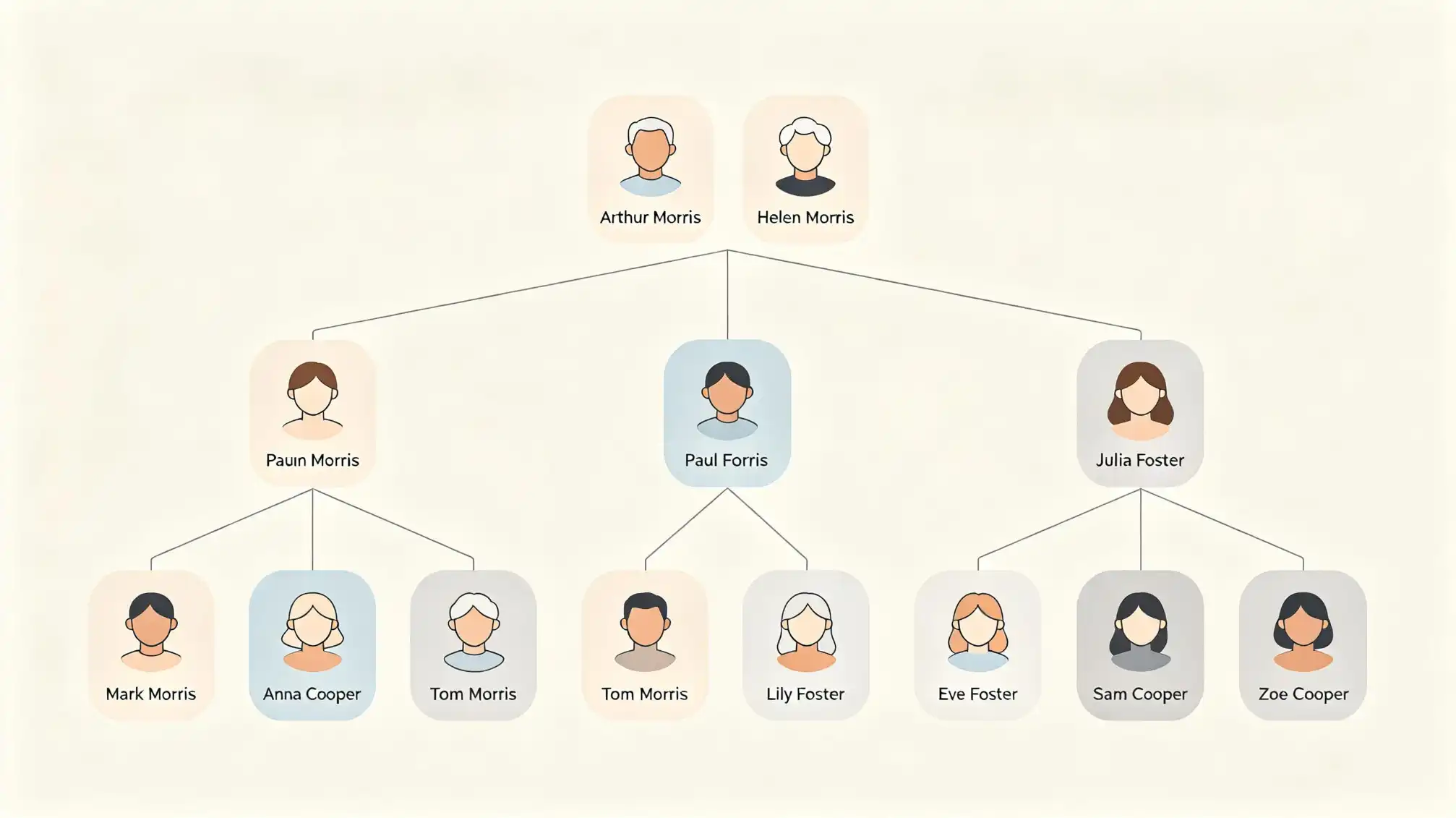
Now it is time to place your information on a chart. Start with yourself at the bottom or center. Above you, place your parents. Above them, place your four grandparents. You do not need complicated software for this first tree. A blank sheet of paper, a whiteboard, or a simple spreadsheet works well.
When you draw your tree, leave enough space for notes. Add the date and location under each name. This basic format makes it easy to compare documents and ask more precise questions. Once the three-generation chart feels solid, you can add siblings, aunts, uncles, and cousins in a separate layer.
You can also create two separate charts if you want to keep your mother’s side and father’s side clean and readable. Some families prefer a chart for each lineage, plus one combined overview. Choose the format that feels clear to you.
Check the Details With Living Relatives
A family tree becomes truly useful only when it is reliable. Before you share or print your chart, review it with a living parent or grandparent. Ask them to spot mistakes in spelling, dates, or relationships. A small error can create confusion for future generations, especially when two close relatives share the same name.
This verification step also gives you a chance to thank the people who helped you. Marking a chart with “verified by” notes is a nice way to show respect for their memory and their time.
Expand From Parents and Grandparents to Ancestors
Once your core tree is accurate, you may feel ready to go deeper. The branches above your grandparents lead to great-grandparents and beyond. Look for census records, immigration papers, and military service files. Online archives are useful, but they are not always complete. Combine them with interviews and copies of physical documents from relatives.
As your tree grows, keep using the same rhythm: ask, record, verify, and connect. You will soon see patterns across generations, such as migration routes, family occupations, or naming traditions. Those patterns are the reward for building your tree patiently.
Keep Your Family Tree Updated
A family tree is never truly finished. Births, marriages, and new discoveries happen all the time. Build a habit of reviewing your chart each year. Add new dates and stories as family members share them. If you have digital copies, back them up so a single computer problem cannot erase years of work.
You also do not have to create the tree alone. Ask a cousin or sibling to collaborate. Different generations remember different details, and each perspective makes the chart richer. The goal is not a perfect document; it is a living record of the relationships that shape your family.