How to Record Your Grandparents' Family History Without the Awkward Silence
Every family tree hides a thousand stories that never made it onto paper. The names and dates are easy to find, but the laughter, the heartbreak, the lucky turns, and the stubborn family jokes only live inside your grandparents' heads. That is why getting your grandparents family history recorded is one of the most generous gifts you can give to the next generation.
The key is not to treat it like an interview but like a long Sunday afternoon chat. If you have ever worried about sitting down with a recorder and getting one-word answers, take a breath. With a little warmth and the right kind of questions, the stories usually start flowing on their own.
Why Grandparents Are the Best Archivists
Libraries store documents; grandparents store lived experience. They remember not just what happened, but how it smelled, what they wore, and who said what. This is the texture that makes family history questions worth asking. When you sit down with them, you are not looking for bullet points in a biography. You are collecting the raw material of your family's emotional DNA.
So forget the giant list of dates and places for a moment. Think of yourself as a detective of feelings and daily life. Ask about the house they grew up in, the sound of their mother's voice calling them home for dinner, the school prank that got them into trouble, or the moment they first met your other grandparent. These are the details that will make your children and grandchildren feel like they actually know their ancestors.
Everyday Prompts That Open Doors
Instead of a formal questionnaire, use what I like to call “side-door questions.” They are simple, gentle, and invite a story rather than a single answer. If you are looking for grandparents family history ideas that don't feel like a school project, try some of these:
- What is the earliest memory that still feels like a movie in your head? – This gives them permission to wander.
- Tell me about a meal you could never forget. – Food instantly unlocks memories of family gatherings, scarcity, and joy.
- Who was the family member you never got to meet, but wish you had? – This gently opens the door to loss and legacy.
- What was the one thing your parents never understood about you? – A playful and honest route into their younger self.
- How did you and your best friend meet? – Friendships often reveal more about a person's values than a career summary.
- If you could relive one ordinary day from your childhood, which would it be? – Ordinary days hold the truest picture of life.
Notice that none of these are direct “family history questions” about surnames or migration routes. That's because those facts usually come out naturally while the story is being told. Let the dates and places ride on the back of the story, not the other way around.
The Art of Asking Without Interrupting
One of the biggest mistakes we make when talking to grandparents is jumping in with follow-up questions too fast. Grandparents often pause to gather their thoughts. That silence is a golden moment. Count slowly to ten before saying anything. In that silence, they are usually rewinding the film of their life and reaching for a memory that might otherwise have stayed hidden.
When you do speak, use simple phrases like “Really?” or “And then?” or “What did that feel like?” These small nudges keep the flow without steering the ship. Also, pay attention to their hands. If they start pointing toward an old cabinet or reaching for a shelf, follow that movement. They are about to show you a physical treasure.
Ready to Start? Do It Warmly
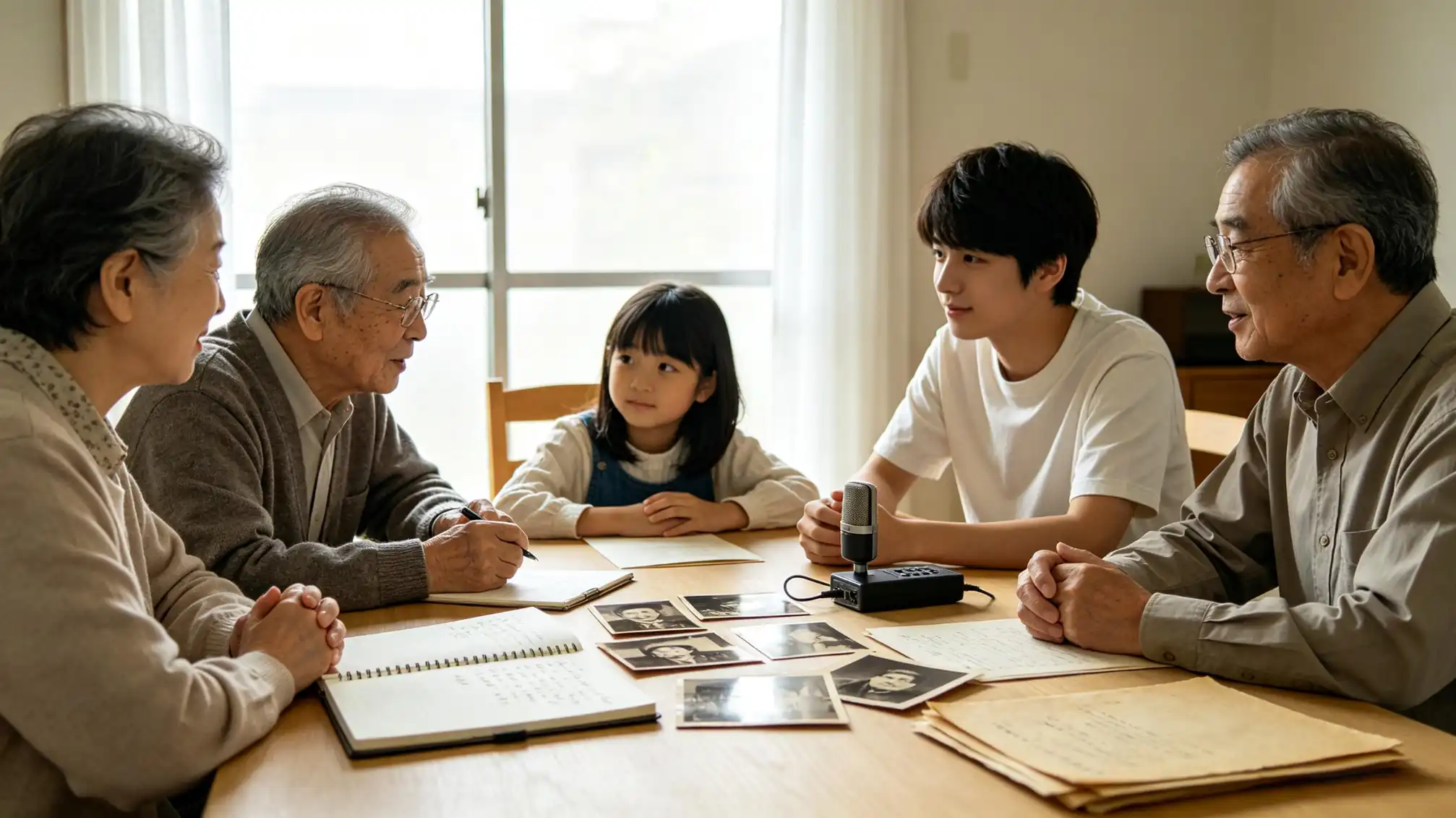
You do not need fancy equipment. A smartphone with a voice memo app is enough. Set it on the table between you, turn the screen off, and place a cup of tea nearby. If you like visuals, you can point the camera at their hands while they speak. Hands tell stories too. And always ask permission before recording—then reassure them that they are doing you a favor, not the other way around.
Save the Stories Before They Fade
Time is the quiet enemy of memory. This is not a pressuring statement, just a gentle nudge. The best day to start is the next time you are around them with no agenda. Bring along a few old photos or a family object, even something as simple as a ceramic spoon rest or a war medal. Holding an object helps memory travel backward.
Once you have a few recorded conversations, do not leave them sitting on your phone. That is where the magical “someday” goes to die. A wonderful way to keep everyone in the loop is to create a shared family story space online. If you are looking for a place to upload and organize those recordings, familylove.love/stories can be a lovely shared digital album where multiple relatives can listen and add their own commentary.
A Fresh Angle: The Grandparent-Led Tour
Instead of a question-and-answer session, think of it as a guided tour. Ask your grandparent to be the tour guide of their own life. You might say, “I want to hear the story of the year you were twenty-one,” and then just let them lead. You will be surprised by where they take you. This approach removes the pressure of “perfect questions” and turns the whole afternoon into a shared journey.
Remember the Details That Aren't in the Archives
What were their grandmother's favorite songs? How did your grandfather feel when he held his first baby? What was the family running joke at every holiday dinner? These are the details that make your family unique. They will never be on a census or a birth certificate. But they are precisely the ones that will feel most alive to your grandchildren decades from now.