Grandparents Family History: A Warm, Low-Pressure Way to Capture It
Collecting grandparents family history is less about finding the perfect list of questions and more about creating an afternoon where stories slip out between cups of tea. The best oral history often arrives sideways: a comment about a childhood street, a complaint about a first job, a recipe that reminds someone of a person you never met. Your job is not to interrogate. It is to notice the doorway and gently walk through it.
When we treat a grandparent like a witness to be interviewed, the conversation can feel stiff. When we treat them like the keeper of a living family archive—and let them steer for a while—the memories usually come more freely. Here is how to gather those stories with warmth, a little structure, and far less pressure.
Begin with a Story, Not a Script
Instead of opening with “Tell me about your life,” ask for one small scene. Specific memories are easier to answer and often lead somewhere richer. What did your street sound like when you were growing up? Who taught you to cook something you still make today? What was the first job you ever had? These prompts give a grandparent a place to stand, and from there they can wander.
Use a short list of family history questions as a safety net, not a test. Keep it in your lap or on your phone. If the conversation stalls, choose one. If it is flowing, let the list wait.
Door-opening prompts
- What is one of your earliest memories of home?
- Which relative made you feel especially safe as a child?
- What did your family do for fun when money was tight?
- What is a family story you heard so often you can still repeat it?
- How did you meet the person you married—or the person who became your closest friend?
Then listen for the detail that carries feeling: the song someone hummed, the coat they wore, the phrase they used when they were annoyed. A useful follow-up is almost always some version of, “What happened next?” or “Who else was there?”
Set Up a Quiet Recording Without Making It Feel Clinical
You do not need a studio. A phone with enough storage is plenty. Ask permission before recording, explain why you want to keep it, and let your grandparent know they can ask you to stop at any time. Start with an easy warm-up—names, the date, where you are sitting—and then ease into the stories.
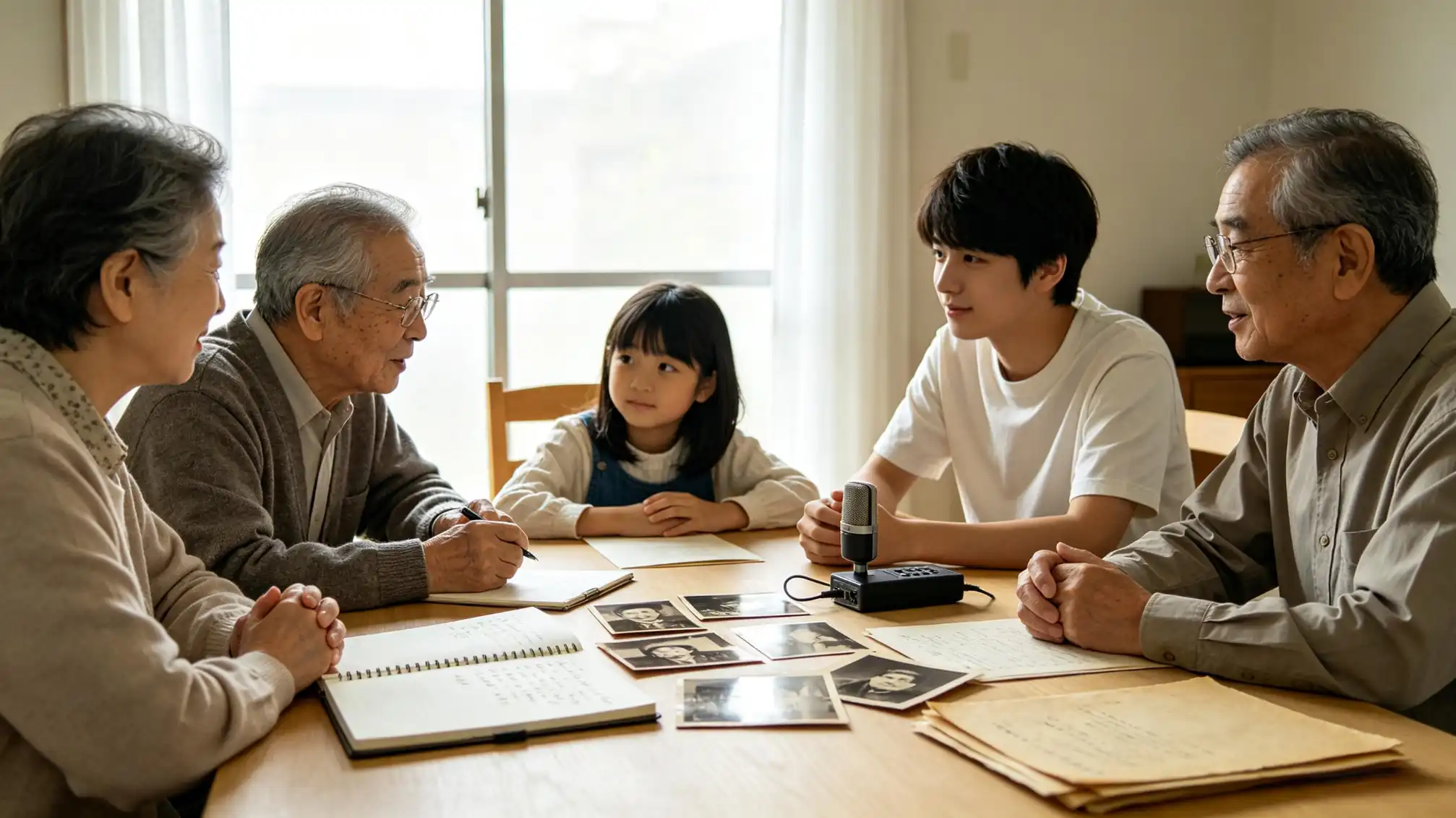
Keep the phone visible but not distracting. Short sessions work well: twenty to thirty minutes is often enough before voices tire or attention drifts. Afterward, make a backup before you do anything else, and write down the date, the people present, and one sentence about what you talked about.
If you want a simple place to gather finished recordings, photos, and written memories so other relatives can enjoy them, add them to your family stories collection. The point is not to produce a polished documentary. It is to make sure the stories do not stay trapped on one phone.
Follow the Threads, Not the Checklist
Good oral history is rabbit-hole friendly. If your grandparent mentions a sister you barely knew, pause and ask about her. If a holiday memory keeps coming up, stay there. The goal is not to cover every decade evenly. It is to capture the moments that still have heat and color.
When you need a gentle redirect, try a bridge phrase: “That makes me think of something—did your parents ever talk about how they met?” A bridge keeps the conversation feeling like a shared thread rather than a questionnaire.
Gentle follow-ups that go deeper
- What did that feel like at the time?
- What did you think would happen next?
- Who did you talk to about it?
- What did your family say about it afterward?
- Is there a part of that story you think we get wrong?
That last question can be revealing. Families often repeat a version of an event for decades. Giving your grandparent room to correct or complicate it can bring you closer to the texture of what really happened—and to the people involved.
Ask About the Ordinary Stuff Too
We tend to ask about weddings, wars, migrations, and big losses. Those matter. But everyday details make family stories feel lived-in. Ask about school lunches, laundry day, the walk to church, the first car, the neighborhood dog, the song someone played on repeat. Ask what a typical Saturday smelled like. These questions do more than preserve trivia. They help younger relatives understand how a grandparent became who they are, and they give you natural places to bring in photographs and objects.
Handle Sensitive Memories with Care
Not every story is ready to be told. If your grandparent hesitates, changes the subject, or says, “That is a long story,” do not push. Offer an exit: “We can skip that.” Avoid correcting details while the story is unfolding. Memory is not a court transcript. If two relatives remember an event differently, write down both versions and note who told which one. In the moment, let the person finish. The feeling beneath the memory is often truer than the exact year.
Bring Relatives Into the Conversation
You do not have to do this alone. Siblings, cousins, aunts, and uncles can add questions, share photos, or join a group call. Relatives who live far away can send a short video question that you play during the conversation. Group conversations need a little hosting: invite one person to start, give everyone a turn, and watch for the relative who keeps getting interrupted. A round-robin prompt such as “Let’s each share one memory of the old house” keeps the quieter stories from being lost.
Turn Thirty Minutes into a Family Archive
After the recording, do a little maintenance while it is fresh. Rename the file with the date and names. Write three bullet points about what you covered. If you have time, make a rough transcript or a short summary—even a list of names and places helps future listeners. Store the file in two places, and share a favorite clip with the person who told it. Then plan the next conversation lightly. “I would love to hear more about your first job sometime” is a warmer invitation than “We still have forty questions to get through.”
Keep the Door Open
The best interviews do not end when the recording stops. Follow up with a thank-you note or a voice message, mention a detail you have been thinking about, and ask if you can send a photo you found. Over time, your grandparent may start saving stories for you: “You will want to write this one down.” That is the real sign that grandparents family history has become a shared family habit rather than a project you imposed.
And when the stories come, let them be imperfect, funny, contradictory, and unfinished. That is what family history sounds like when it is still alive.