Family History: The Details That Vanish in Three Generations
Most people begin exploring their family history with a single question: who was this person, really? A name on a certificate, a face in a faded photograph, a story that is always told but never explained. Beginners often assume genealogy is about collecting dates and places. It quickly becomes something quieter and more worthwhile — rebuilding a relative's life as it was actually lived, day by day.
That is the real value of recording a life story. It is not nostalgia. It is the difference between knowing that your great-grandfather was a farmer and understanding that he walked four kilometres to market every Thursday for thirty years, kept his accounts in pencil inside a cupboard door, and stopped speaking to his brother in 1948 over something nobody now remembers. The second version survives. The first vanishes.
What Disappears First When Nobody Writes It Down
Hard facts hold up reasonably well over time. Names, birth years, and marriage dates are usually written down somewhere — a register, a census, a family bible, an immigration record. What disappears quickly is context: the sound of a voice, the shape of a working week, the reason a family moved, the food that was cooked when someone was ill, the nickname only two people ever used.
Within three generations, the texture of a life is usually gone. Your grandchildren may inherit a surname and a nationality, but almost nothing about how their ancestor spent a Tuesday afternoon, what he was afraid of, or what he was proud of. Those are precisely the details that make a family tree feel like a family rather than a diagram.
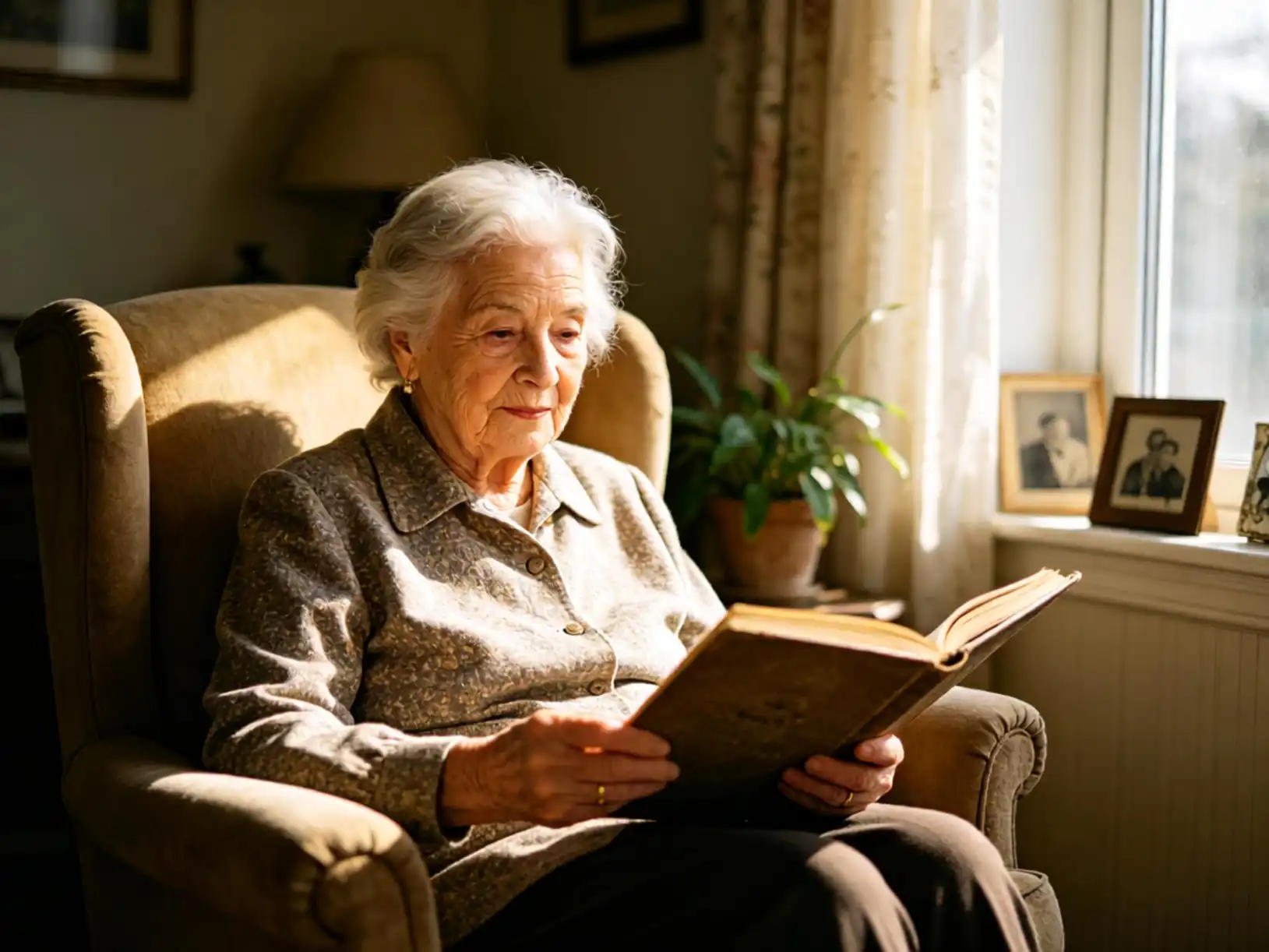
A Life Story Is More Than a Timeline
When beginners start a family history project, they naturally reach for chronology: born here, married there, died later. Timelines are useful scaffolding, but a person is not a sequence of events. Two layers of detail are worth capturing deliberately.
The ordinary day
Ask about routine and the answers are unexpectedly revealing. What time did the household wake? Who made breakfast? Was there a radio, and what was played on it? How far was the walk to school or to work? What happened on Sundays? Questions about an unremarkable day are easier to answer than grand ones, and they reconstruct a world that no document records.
The turning points
Alongside the routine sit the decisions: a migration, a job change, a war, an illness, a falling out, a marriage that surprised everyone. What matters is not only what happened but how the person explained it. The same event told by two siblings can sound like two different lives — and both accounts belong in the record.
Why Beginners Are Often the Best People for This Work
There is a persistent myth that family history is work for retired researchers with archival experience. In practice, beginners hold two advantages that no professional can borrow. First, access: you can sit with a living relative, ask a follow-up question, and notice when a story changes slightly on the second telling. Second, timing: the generation that remembers the details is still here, but not for much longer.
Genealogy rewards patience, not credentials. A person who has never opened a census record but who records forty minutes of a grandmother's memories has already contributed more to the family archive than someone who collects names without context.
How to Capture a Life Story Without Overwhelming Anyone
Relatives rarely refuse to talk; they simply do not know where to start. A little structure solves most of the problem.
- Choose one person, not the whole family. A single life story, done properly, teaches you the method you will reuse for everyone else.
- Ask about objects and places. A photograph, a kitchen table, or a street address unlocks memory far faster than an abstract question about feelings.
- Record the voice if you can. An audio file preserves accent, humour, and hesitation — details that no transcript fully carries.
- Write up your notes within a week. Memory of a conversation fades quickly, and the small asides are usually the most valuable part.
- Label everything. Names, dates, and who told you what. An unattributed story becomes folklore within two generations.
Where Family History, Genealogy, and Memory Meet
Documents and memories do different jobs, and the strongest projects combine them. A birth record tells you where an ancestor was on one particular day; a recorded memory tells you what that place meant to them. When the two disagree, that is not a failure — it is often the most interesting thread to pull.
This is also where a family tree stops being a list and starts being a map of people. If you are ready to organise what you have gathered so far, you can begin building a structured profile of your relatives on the family page, linking each story to the person it belongs to rather than leaving it in a notebook.
Mistakes That Slow Beginners Down
- Waiting for perfect information. Start with what you already know; gaps can be filled later.
- Interviewing only the oldest relative. Younger family members hold memories of the previous generation too — often the more candid version.
- Chasing famous ancestors. The ordinary lives are usually the ones with no other record, and therefore the most urgent to save.
- Assuming you will remember. You will not. Write it down the same day.
Preserving an ancestor's story is not really about the past. It is about giving the next generation something more than a name and two dates — a sense of how their family handled work, hardship, celebration, and change. That is what makes family history worth the effort, and it is surprisingly achievable in an afternoon.