Tracing Your Ancestors With Evidence: A Practical Research Workflow
Every family history starts the same way: a name, a date, a story someone half-remembers. What separates a shoebox of guesses from a documented family history is method. The researchers who make real progress are not the ones with the largest subscription packages — they are the ones who work in a fixed order, record what they find, and refuse to accept a conclusion they cannot support. What follows is that workflow, from the first conversation with a living relative to the point where your findings are solid enough to publish.
Begin With Living Memory, Not the Archives
Before you open a database, talk to people. The oldest generation in your familyholds information that exists nowhere else: maiden names, migration routes, occupations, and the reason a family left a town. Ask open questions rather than yes-or-no ones — "What do you remember about your grandmother's house?" yields far more than "Was she born in Ohio?" Record the conversation if you are allowed, and follow up on every name mentioned, even the ones that seem unrelated.
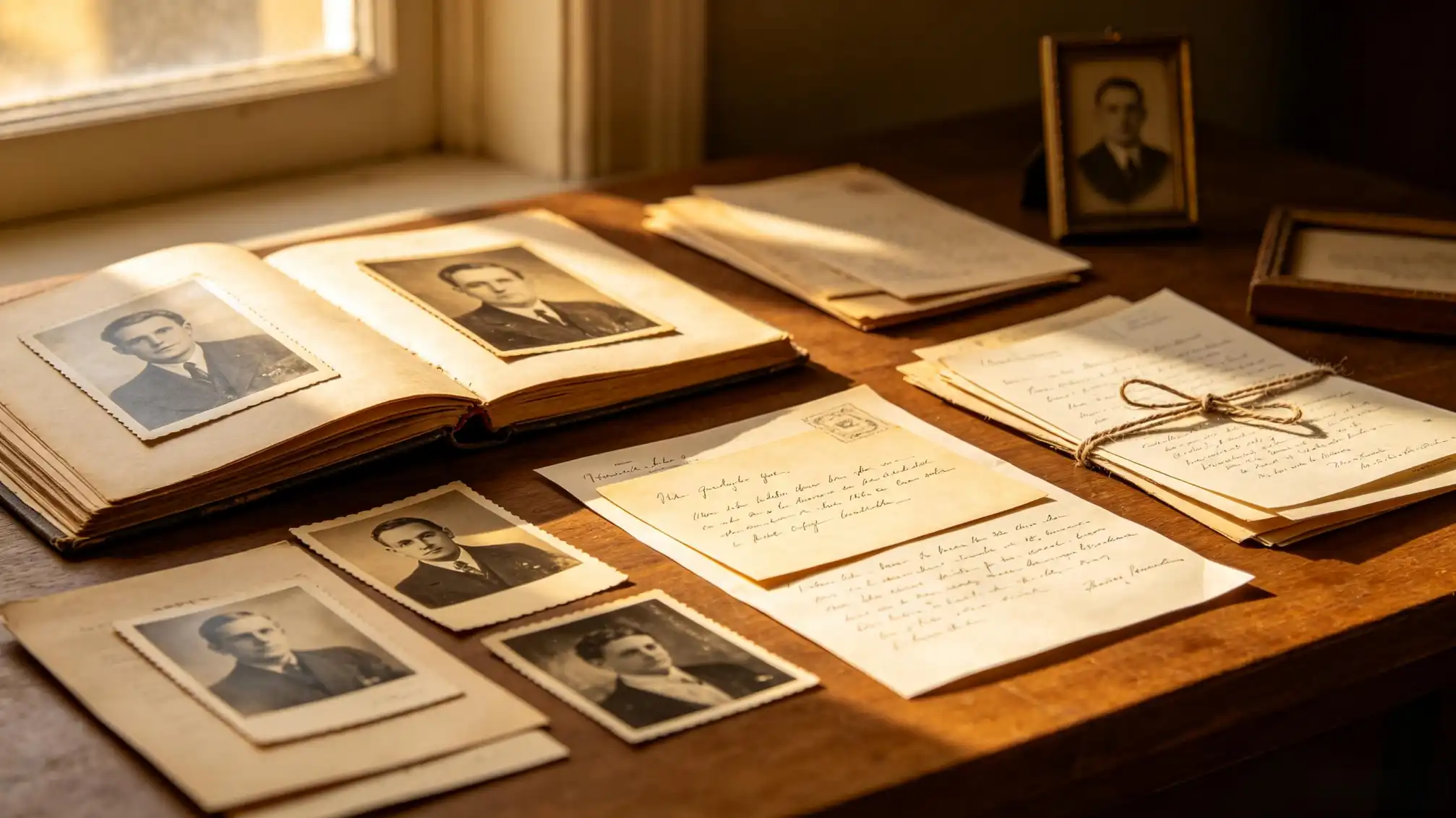
Then search the house. Photographs, letters, funeral cards, family bibles, military discharge papers, naturalisation certificates, school reports and address books are all primary sources. Scan them at high resolution, note who holds the originals, and label the digital copies immediately. Ask specifically who kept the photographs after each death in the family; collections are usually inherited rather than lost.
Map What You Already Know Before You Search
Create a simple working list: name, birth date and place, marriage date and place, death date and place, spouse, children, and the source for each fact. Keep it plain — a spreadsheet is enough. This step exposes the gaps that should drive your next search, instead of whatever the database happens to suggest.
Record places as they existed at the time. County boundaries shifted constantly, and a village that sits in one modern administrative region may belong to a different jurisdiction in the records you need. Note the historic county, the parish, and the nearest large town.
Work Backward, One Generation at a Time
The most common mistake in genealogy is jumping. Someone finds a promising name three centuries back and builds a family tree downward, hoping the lines connect. They rarely do. Instead, prove each generation before moving to the previous one, and identify three anchor events for every couple: birth, marriage and death. When two of the three are documented and consistent, you can move back with confidence.
Learn to distinguish an index from a record. An index tells you a document exists; the document itself tells you what it says. Always order or view the original where possible, because transcription errors are frequent and the details you need — an occupation, a witness, a street address — are often omitted from the index.
Start With Civil Registration and Vital Records
Government birth, marriage and death records are the backbone of modern research. They typically provide parents' names, which is exactly the bridge to the previous generation. Coverage begins at different dates depending on the country, so confirm when registration became compulsory where your ancestors lived. Before that date, you must rely on church records.
Use Census and Enumeration Lists to Rebuild Households
Census returns place a whole household in one place on one night, which makes them excellent for confirming relationships and tracking movement between decades. Read the neighbours, not just your family. Enumerators often walked a street or a village in order, so the surrounding names usually reveal an extended family cluster or a community your ancestors travelled with.
Add Church, Land, Probate and Military Records for Depth
These record groups fill the gaps left by civil registration. Baptisms and burials cover the decades before civil records. Wills and probate inventories name heirs and reveal what a family owned. Land and tax records show residence and status. Military files can supply a physical description and a service history. None of them is indexed as thoroughly as you would like, which is why patience and a well-catalogued archive matter more than speed.
Cite Every Source and Date Every Conclusion
A conclusion without a citation is a rumour. For every fact you add, record where it came from, when you looked, and what the source actually said. Also record what you searched and did not find, because negative evidence prevents you from repeating the same fruitless search in two years' time.
Grade your conclusions honestly: proven when the evidence is direct and consistent, probable when it is strong but circumstantial, possible when it is a working hypothesis. Writing that grade next to the fact keeps you from building a decade of research on a guess.
Break Brick Walls With Cluster Research
When an ancestor vanishes, stop looking at the ancestor and look at the people around them. Witnesses on a marriage record, bondsmen, godparents, neighbours, business partners and travelling companions often leave better documentation than the person you are chasing — an approach sometimes called the FAN principle: friends, associates and neighbours. If your ancestor disappears from a county, trace their siblings. Families migrated in groups, and a brother's record may name the parents you cannot find.
Write It Down So It Outlives You
Research that stays in a private file dies with the file. Turn your findings into short, sourced narratives — a paragraph per person is enough: who they were, where they lived, what they did, and which records prove it. Publish those stories where relatives can read and correct them, for example on a story page at familylove.love/stories, and keep the citations attached so other researchers can verify your work. Living relatives often spot errors instantly and supply the missing pieces in return.