Starting Your Family Tree: A Beginner's Guide to Tracing Ancestors
Most people picture a family tree as a tidy diagram: names in boxes, lines connecting parents to children, a few dates underneath. That picture is accurate but incomplete. What you are really building is a record of people who lived, worked, moved, and made choices that shaped the life you have now. For beginners, that shift in perspective matters. A family tree is not a form to fill in — it is an ongoing research project that grows every time you answer one question and uncover three more.
This guide walks through what a family tree actually represents, why family history deserves your time, and how to start tracing your ancestors without drowning in subscriptions, spreadsheets, or contradictory records.
What a Family Tree Really Represents
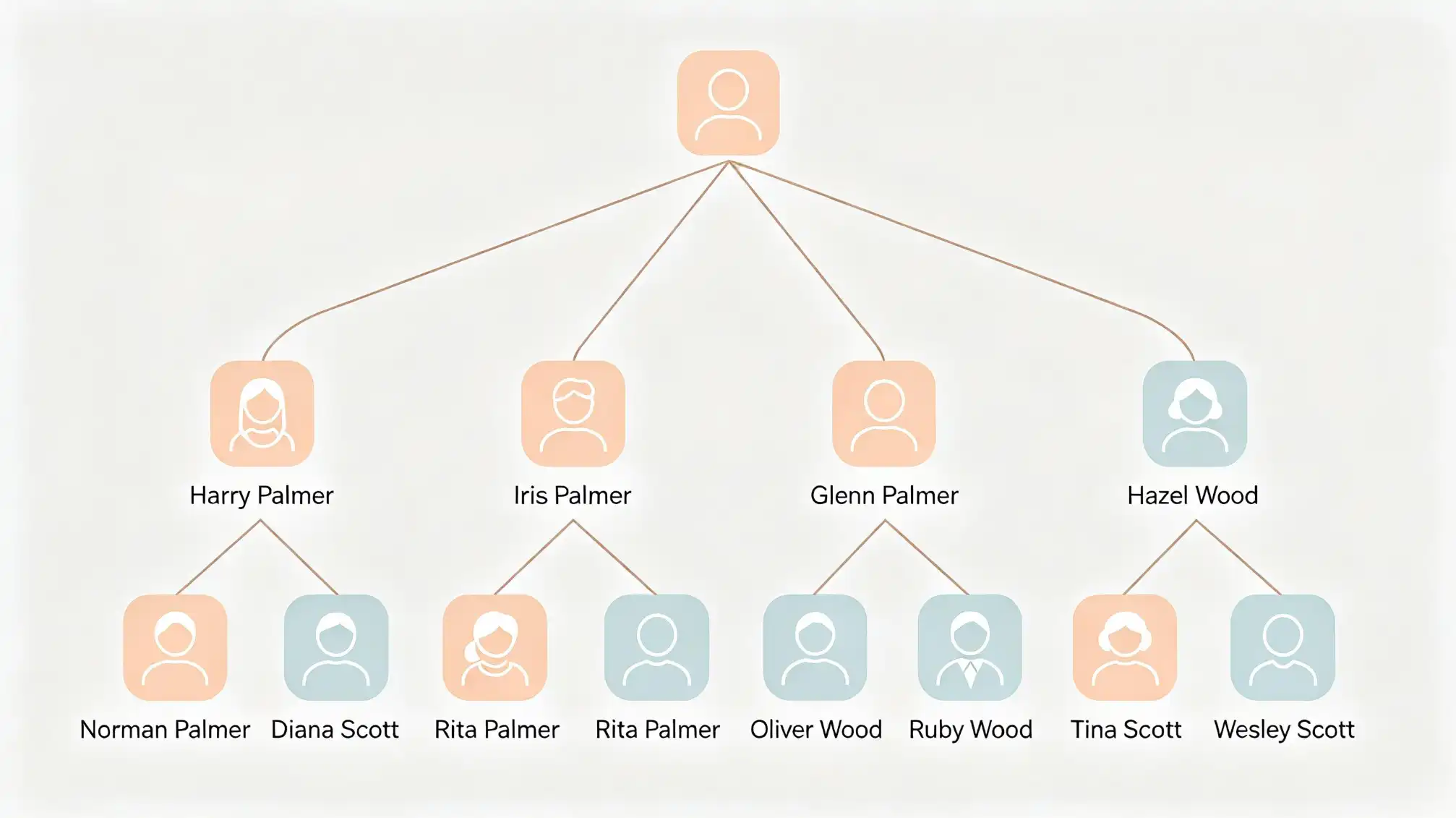
At its simplest, a family tree maps biological and legal relationships across generations. You sit at one point on that map, with parents above you, grandparents above them, and so on. Genealogy adds the context that turns a chart into a story: where those people lived, what they did for a living, when they migrated, whom they married, and what happened to their children.
Two distinctions help beginners stay oriented. First, a pedigree chart traces direct ancestors only — parents, grandparents, great-grandparents — in a straight line. Second, a family group record includes siblings, spouses, and collateral relatives, which is where most of the interesting detail hides. You will eventually need both, but starting with the direct line keeps the work manageable.
It also helps to accept early that a family tree is never finished. Records are lost, names were spelled inconsistently, and some ancestors simply did not want to be found. Progress, not perfection, is the goal.
Why Family History Matters
Genealogy has grown from a niche hobby into one of the most popular research activities in the world, and the reasons are practical as much as sentimental.
- Identity and context. Knowing where your ancestors came from explains family traditions, inherited names, and even recurring health patterns.
- Preservation. Photographs fade, older relatives pass away, and documents get thrown out during house moves. Research now prevents permanent loss later.
- Connection. A family tree gives you a natural reason to contact cousins you have never met and to ask questions that would otherwise feel intrusive.
- Perspective. Learning that a great-grandmother raised six children through a war or a famine tends to reframe your own difficulties.
There is also a quieter benefit. Family history gives children a sense of belonging to something larger, and that sense is easiest to build when the stories are written down rather than half-remembered at gatherings.
The Building Blocks: Names, Dates, and Places
Every reliable entry in a family tree rests on three pieces of information: a full name, a date, and a place. Record all three for every event you can verify — birth, marriage, death, and major relocations.
Beginners often collect names and skip locations, which creates problems later. Two men named John Miller may live in the same county, but the one born in 1872 in a specific village is far easier to distinguish from the one born in 1874 across the border. Places are also what unlock the archives: census returns, parish registers, and land records are organised geographically.
Spelling Was Not Standard
Before widespread literacy and centralised record-keeping, surnames were written as they sounded. A clerk might record “Kavanagh” as “Cavanagh,” “Kavanah,” or “Cavenagh” within the same decade. Search variants rather than assuming a record does not exist.
How to Begin Without Getting Overwhelmed
Start With What You Already Know
Write down your own details, then your parents’ and grandparents’ full names, birth dates, and birthplaces. Do this on paper or in a simple digital document before touching any subscription database.You will be surprised how much you already have — and how many gaps appear immediately.
Interview Living Relatives First
Older family members are irreplaceable sources. Ask open questions rather than yes-or-no ones: where did the family live before the war, what did your father do for work, who was the strictest aunt. Record conversations if you can, and take notes on nicknames, maiden names, and approximate dates. Approximate is fine; you can verify later.
Work Backwards, One Generation at a Time
Genealogy is a discipline of sequence. Confirm a parent before chasing a grandparent. Jumping three generations back because a name looks familiar is the fastest route to attaching the wrong family to your tree — a mistake that can take months to untangle.
Move to Documents
Once living memory runs out, turn to records. Birth, marriage, and death certificates are the backbone, followed by census returns, immigration lists, military files, and newspaper archives. Each document should ideally give you a name, a date, and a place that matches what you already know.
Common Beginner Mistakes
- Trusting user-submitted trees. Online trees are hints, not evidence. Always check the underlying source.
- Ignoring siblings. A brother or sister may appear in a record where your direct ancestor does not.
- Skipping the citation. Note where each fact came from, or you will research the same question twice.
- Believing every family legend. Stories often contain a true core wrapped in embellishment — test them rather than repeating them.
- Buying tools too early. Free archives and library access cover far more than most beginners expect.
Keeping Your Research Organised
Whatever you use — dedicated genealogy software, a spreadsheet, or a physical binder — consistency matters more than sophistication. Keep one master list of people, one folder of documents named by surname and year, and a running list of unanswered questions. Back up digital files in at least two places.
As your tree grows, it becomes something worth sharing. Creating a private family space where relatives can view photos, add corrections, and read the stories behind the names turns a personal project into a shared family record. You can see how that works at https://www.familylove.love/family. The research itself stays the same; the audience simply widens.
When Progress Stalls
Every researcher hits a wall: a missing birth record, an ancestor who appears from nowhere, a surname that changes spelling across an ocean. Three strategies work most often. Widen the geography and search neighbouring parishes or counties. Widen the date range by a few years on each side. And widen the people — research the spouse’s family, the witnesses on a marriage certificate, or the neighbours listed on a census page, because families migrated and settled in groups.
It is also worth revisiting earlier conclusions once a year. Newly digitised archives appear constantly, and a record that did not exist online five years ago may resolve your brick wall this month.
Start small, stay curious, and let the tree grow at the pace your evidence allows. Ten well-documented ancestors are worth far more than a thousand unverified names.