Family History Starts With a Voice: Capturing the Stories Behind the Names
When most people decide to explore their family history, they start the same way: with a chart. They open a family tree template, type in grandparents' names, guess at birth years, and try to remember which cousin belongs to which branch. It feels productive, and for a while it is. But the charts only hold what someone already wrote down somewhere — and the person who remembers why those facts mattered is often still sitting in the next room.
The most valuable thing you can collect in your first year of family history work is not another ancestor's name. It is the life story of one living relative, recorded while they can still tell it in their own words.
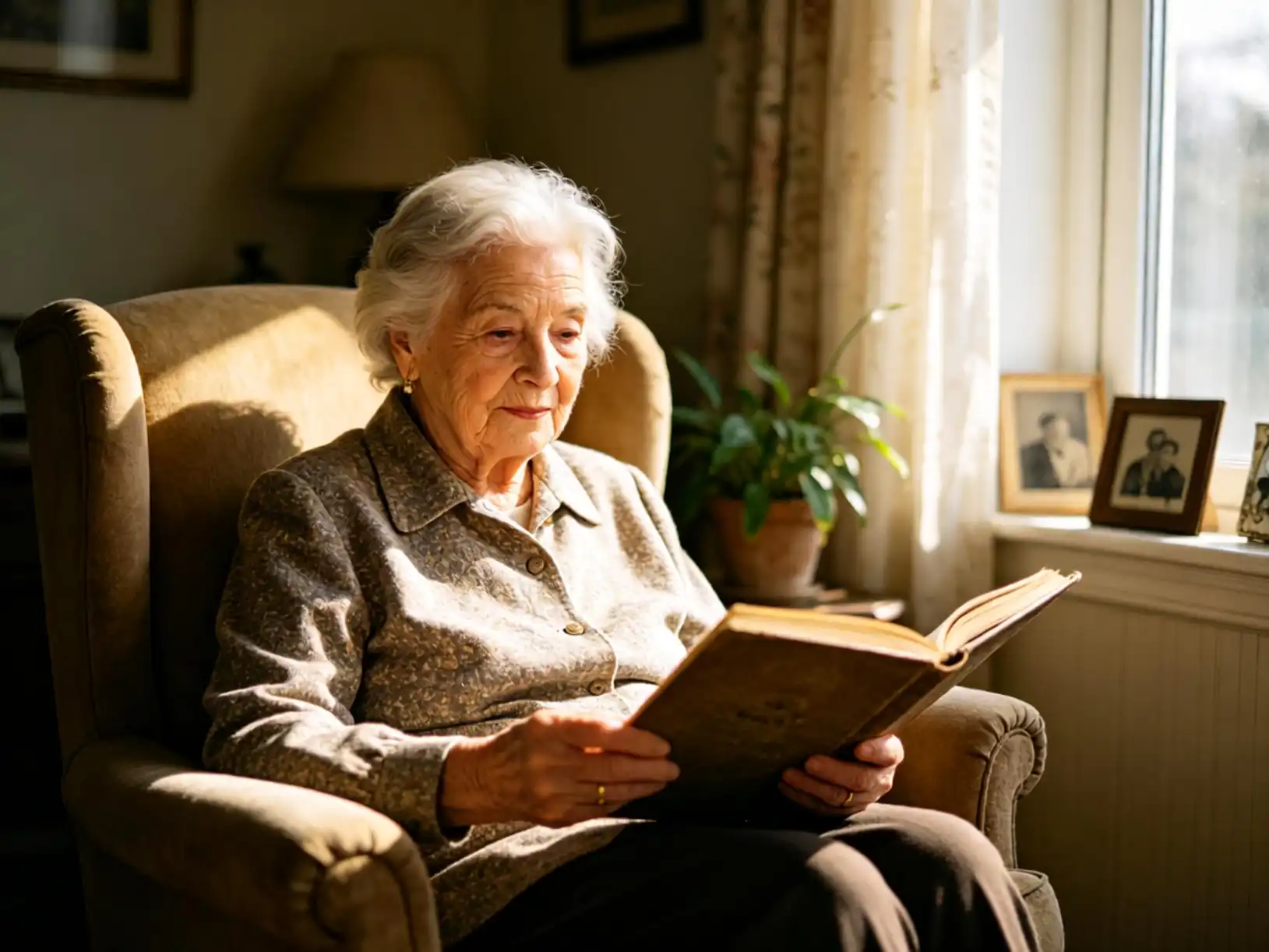
A name on a chart is not the same as a life
A family tree tells you that Margaret was born in 1938 and married in 1959. It does not tell you that she left school at fifteen to help at home, that she met her husband at a dance hall, or that she spent the first winter of her marriage living with her in-laws and hated every day of it. Those details are not decoration. They are the context that explains migration patterns, occupations, family estrangements, and the choices your own parents made.
This is why oral history and genealogy work best together. Genealogy gives you the skeleton: the births, deaths, marriages, and addresses. A recorded life story gives you the muscle and the reasons. When you eventually hit a dead end in the records, the stories are often what point you toward the right parish, the right surname spelling, or the right branch of the family.
What disappears when nobody asks
Memory is not a fixed archive. It fades, reshapes, and quietly drops the details nobody asks about. Photographs are the clearest example: within two generations, the names written on the back stop being legible to anyone alive, and faces become strangers. Documents go the same way. So does language — the phrases, recipes, songs, and habits that feel ordinary today and become impossible to reconstruct fifty years from now.
Beginners often assume they will get to it later, once they have more time, or once they have finished the tree, or once the family is less busy. In practice, the people who can answer your questions have a window, and nobody knows how wide it is. Starting with one relative this month is dramatically more useful than planning a comprehensive project for next year.
Start with one person and one afternoon
You do not need a microphone, a studio, or a research plan. You need one relative, one quiet hour, and a willingness to ask open questions and then stop talking. Choose the oldest willing relative first, but do not overlook the second choice: an aunt, uncle, or cousin who married into the family and remembers it from the outside. They often notice things that blood relatives take for granted.
Before the conversation, write down what you already know about them and where the gaps are. Then set the notebook aside. The goal of the first session is not completeness. It is to establish that their version of events matters and that you want to hear it.
Questions that unlock memory
- Where did you live when you were small, and what did the house feel like?
- What did your parents do for work, and what did they worry about?
- What were you told about your grandparents — and what did you find out later?
- What did a normal Saturday look like when you were ten?
- Which person in the family surprised you the most, and why?
- What school was like, who your friends were, and what you did after school let out.
- What changed most in your lifetime that younger people would find hard to picture?
Follow-up questions matter more than the script. When they say a name, ask how that person fits in. When they say a place, ask what it looked like. When they pause, wait instead of rescuing them — pauses are where the unexpected memories surface.
Record in whatever form fits the moment
Some relatives light up in front of a recorder; others freeze. Match the method to the person. Audio is the most efficient option and preserves tone and dialect. A written summary after the conversation works well for someone talks more freely in casual conversation than in a formal interview. Video is worth it when the person has photographs, objects, or documents to show while talking.
Whatever you choose, label everything the same day, with a date, a place, and the people present. Unlabelled files are the main reason well-intentioned recordings never get used. Note the names mentioned in the conversation too; those notes become a searchable index of people you can add to your family tree.
Turn scattered memories into something you can read
A pile of audio files is an archive, not a story. Once you have two or three sessions with a relative, write a short chronology in plain language: born here, moved there, worked at this place, married this person, lost this relative. Keep their phrasing where it is vivid, and mark where you are unsure rather than smoothing over the confusion.
This is also the natural point to get organized. If you want a simple place to keep household records, growing branches, and the profiles you are building for each relative, the family page is a practical starting point: build out the names and relationships you already have, then attach the stories you collect to the right person instead of storing them in a notes app you will never revisit.
How life stories make your genealogy research better
Once you return to record-hunting, the stories you collected do real work. They tell you which country or province to search, which spelling variants to try, and which occupations belong to which generation. They explain why a family left a place — not just that they left. They identify the relatives who kept documents, which is often how beginners find the first box of photographs.
They also protect you from confident mistakes. A cousin's recollection of who an unlabelled wedding photo shows is not proof, but it gives you a hypothesis to test against birth and marriage records. Compared with guessing at ancestors from a search engine, that is a genuinely strong start.
Where beginners usually get stuck
Three things derail most first attempts. Expecting the relative to narrate in perfect chronological order is the first; real memory jumps around, and that is fine. The second is treating the process as an interview rather than a conversation, which makes people feel tested. The third is waiting for a perfect method — the right software, the right camera, the right questions — and never pressing record at all.
A simple habit beats an ambitious plan: one conversation a month, one summary written within a week, one set of names added to your family tree. Repeated a dozen times, that produces a body of family history with more texture than most professional genealogies ever contain.
What you are actually leaving behind
Preservation is not only about data. A recorded life story tells a future grandchild what their great-grandmother's voice sounded like and how she laughed at her own jokes. It shows the ordinary texture of a life that no census record will ever capture. Charts describe lineage; voices describe people. When both are kept together, the family history you build becomes something your own descendants can actually recognize.