How to Build a Shared Family Space That Keeps Your Family Memories Alive
Every family has them: the shoebox of photographs nobody has opened in a decade, the story Grandma told at every holiday dinner, the recipe card in handwriting you would recognize anywhere. Together they make up your family memories — and right now those memories are probably scattered across three houses, two phones, and one cloud account nobody remembers the password to.
Preserving them does notrequire a museum, an archivist, or a big budget. It requires a shared space: one place, physical or digital or both, where your family history is visible, easy to add to, and open to everyone. Here is how to build one your family will actually use.
Why "Shared" Matters More Than "Perfect"
Most memory projects fail quietly. One person becomes the keeper of everything, gets overwhelmed somewhere around the third photo album, and the boxes go back in the closet. A shared space works differently: it spreads the effort, keeps the material where people can see it, and turns preservation from a chore into a habit.
It also changes who gets to contribute. When the record lives in one relative's basement, only that relative's version of events survives. When it lives in a shared space, cousins, in-laws, and grandchildren can add photos, correct dates, and fill in the parts of the story nobody else knew. That is how a thin family history becomes a rich one.
Begin With What You Already Have
Before you buy albums, scanners, or software, take an honest inventory. Walk through the house with a laundry basket and gather:
- Loose printed photographs, negatives, and old albums
- Letters, postcards, and greeting cards worth keeping
- Documents such as birth certificates, military papers, and handwritten recipes
- Small objects with a story — a watch, a ticket stub, an old school report card
Do not try to sort it yet. Gathering comes first; decisions come later. Giving the pile a name, like "the family box," gives it a home and signals to everyone that this project is real.
Pick One Anchor Spot in Your Home
Every shared family space needs a physical anchor — a spot anyone in the family can point to and say, "that is where our stuff lives." It can be a shelf, a small cabinet, a wall, or one sturdy labeled bin.
Two rules make it work:
- Keep it visible. A box in the attic is a box that will be forgotten. A shelf in the hallway gets touched, added to, and talked about.
- Make it easy to add to. If contributing requires moving furniture or asking permission, people will stop contributing.
A wall works especially well for rotating photographs. Swap in a new batch every season and let the previous ones go back into the box. The changing display starts conversations that a static archive never will.
Build the Digital Side So Nothing Gets Lost
Paper burns, floods, and fades. The digital copy is what protects your family photos and documents for the long term — and it is the version every faraway cousin can actually reach.
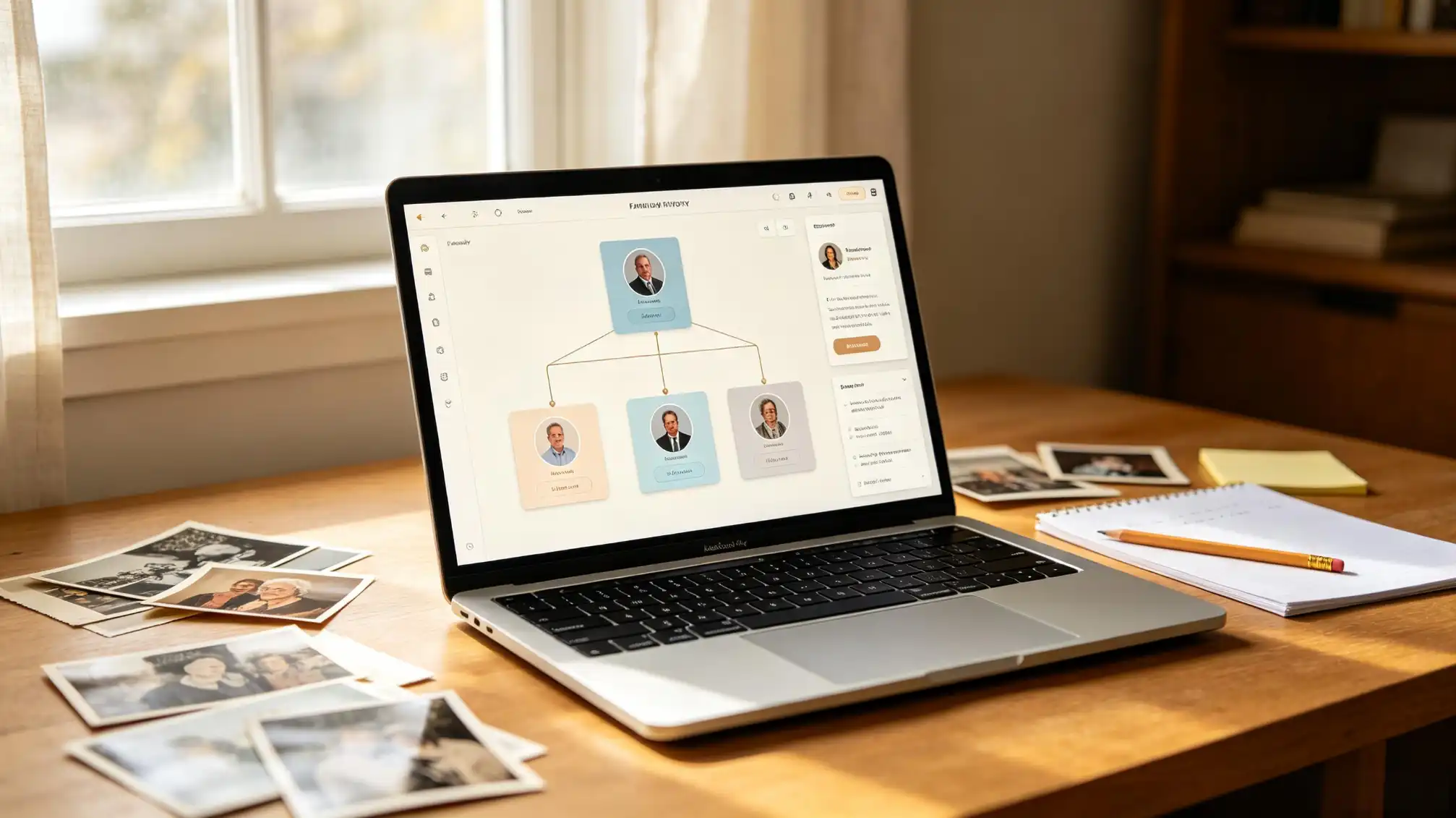
A simple workflow beats an ambitious one:
- Scan in batches of 20 to 30 items so the task never feels endless.
- Name files with a date and the people in them — "1968-Dad-graduation" is worth far more than "IMG_4471."
- Store everything in one shared location, with at least two backups: one in the cloud, one on a physical drive.
- Write down who owns the original items and where they are kept.
Dates matter as much as images. When you label a photo, you are doing real family history work — the kind that lets a grandchild eighty years from now understand who these people were and how they fit together.
Give Everyone a Job and a Voice
A shared space belongs to the whole family, so let the whole family shape it. Invite each person to take one piece:
- The storyteller interviews an older relative and writes down what they remember.
- The photographer digitizes albums and tags the people in each shot.
- The researcher fills in dates, places, and missing names.
- The organizer keeps the shelf tidy, the files named, and the backups current.
Stories are the part families skip most often, and they are the part that matters most. A photograph tells you what someone looked like; a recorded anecdote tells you what they laughed at, how they met, what they worried about. If you want that material to live somewhere permanent and shared, you can add your family's stories alongside the images — a short paragraph is enough. Ten sentences from an aunt can be worth more than a hundred unnamed photos.
Make It a Small, Repeatable Ritual
Preservation fails when it is treated as a one-time purge. It succeeds when it becomes a rhythm. Try:
- A ten-minute "memory minute" at the end of a family dinner, where one person shares a photo and its story.
- A yearly scanning day, with snacks, music, and a goal of finishing one album.
- A holiday tradition of adding the past year's best photos to the shared collection before anyone opens presents.
Small and recurring beats big and abandoned. Even fifteen minutes a month compounds into a genuine archive within a couple of years — and because the work is shared, no single person carries the weight of it.
Hand It Forward to the Next Generation
The final purpose of all this is not storage — it is continuity. Children who grow up around family stories have a stronger sense of where they come from, and teenagers who help label photographs learn that their own lives are part of a longer story.
So let the kids do the fun parts: pressing the scanner button, choosing which picture goes on the wall, interviewing a grandparent on video. The goal is not only to preserve your family memories, but to make preserving them something your family does together, naturally, for decades to come.