Tracing Ancestors with Confidence: A Practical Research Plan
Most family historians begin with a name on the back of a photograph and a vague date. That is enough to start, but it is not enough to build a reliable family tree. Tracing ancestors is a research discipline: you form questions, gather evidence, weigh conflicting clues, and document your conclusions. The plan below is designed for people researching older generations—the grandparents, great-grandparents, and distant relatives who left fewer records and more puzzles. It prioritizes accuracy over speed, and it begins with sources you can reach today.
Begin with the generation you can still question
Online databases are tempting, but they are not the first step. The most valuable source is a living relative who remembers names, places, and stories that never made it into official records. Before you pay for a subscription or request a certificate, exhaust the people and papers within your own family.
Interview living relatives before you search online
Ask open-ended questions and record the answers with permission. Cover full names and nicknames, birthplaces, migrations, occupations, religious affiliation, military service, and family stories. Follow up on inconsistencies: if an aunt says her father was born in one state but the family always lived in another, ask why. Record the interview date and the speaker's relationship to you. A smartphone voice recorder is enough; just be sure to label the file and back it up.
Inventory the home sources you already own
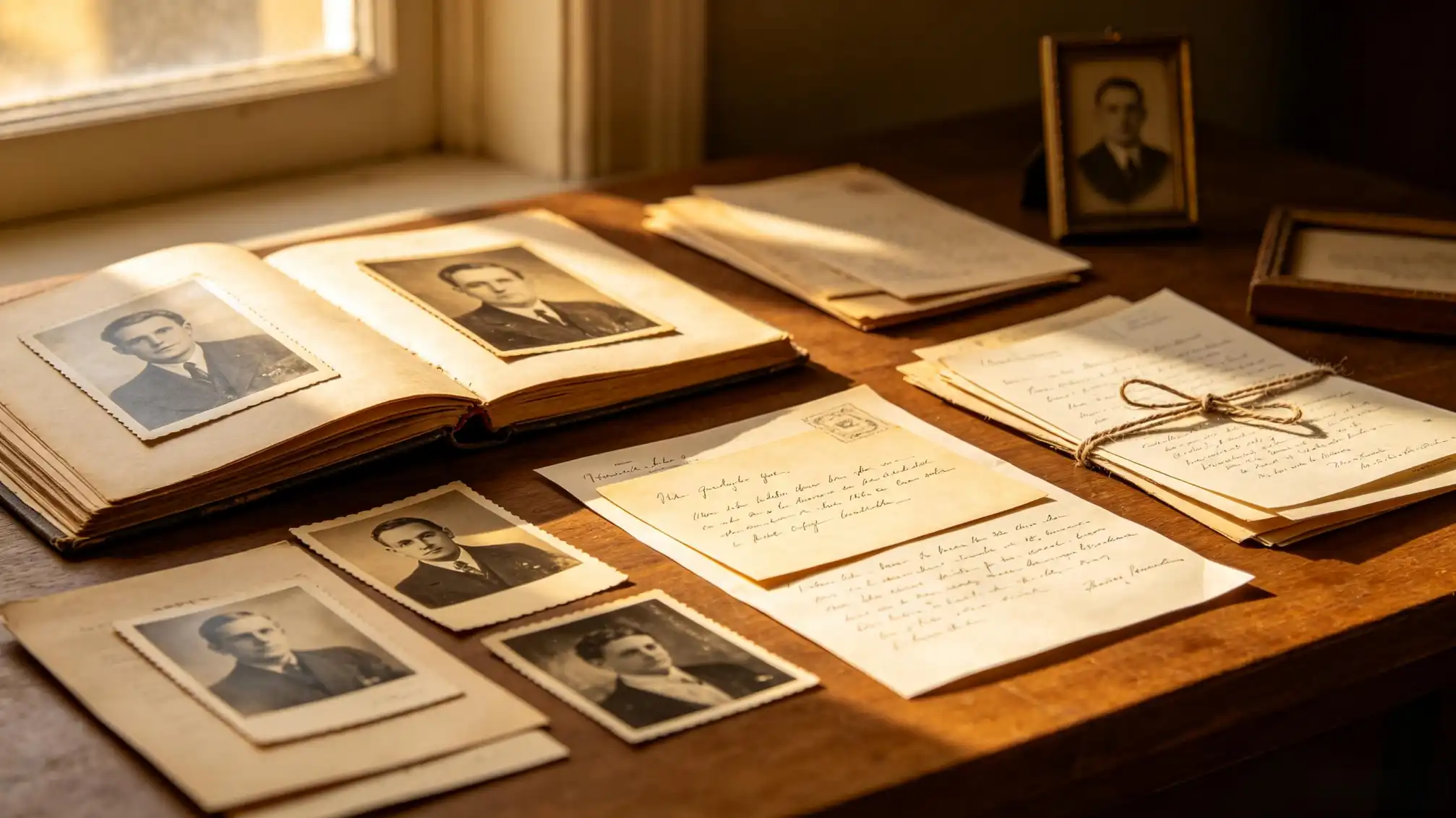
Photographs, letters, diaries, funeral cards, family bibles, certificates, military discharge papers, and scrapbooks often contain clues that online databases cannot supply. Note every name, date, place, and relationship. Scan or photograph the items, but keep the originals in a cool, dry place. Pay attention to marginal notes, photographer stamps on the back of portraits, and the order in which documents were stored—these details can suggest relationships and timelines.
Work backwards one generation at a time
Genealogy is built backwards. Start with yourself, then your parents, then your grandparents. Resist the urge to jump to a famous ancestor with the same surname. Each generation must be documented before you move to the next, because a wrong link early on will send you down the wrong branch for years.
Define a single research question
Instead of asking, “Who were my ancestors?” ask, “When and where did John Doe marry Jane Smith?” A focused question dictates which records to search and when to stop. Write the question at the top of your research log. When you answer it with reliable evidence, move to the next question.
Stay in one place and time until you have proof
Follow the person through records in the same jurisdiction before expanding your search. Track them in census returns, tax lists, directories, and church registers. If a family disappears from one county, check neighboring counties and migration routes. Learn the local history: boundary changes, name changes, and record-loss events explain many apparent dead ends.
Match the record type to the place and era
Every record was created for a reason, and that reason shapes what it contains. A will names heirs; a census lists household members; a military pension file may include a marriage certificate. Before you search, learn when civil registration began in the relevant country, which census years survive, and which church kept records for that community.
Vital, census, and church records
Civil birth, marriage, and death records are the backbone of modern genealogy, but their start dates vary widely. Census records place a family in a specific household on a specific date and can reveal immigration year, occupation, and literacy. Church registers often predate civil registration and include baptisms, marriages, and burials with witnesses and sponsors who may be relatives.
Probate, land, and military records
These records often name relationships that vital records omit. Wills and probate inventories list spouses, children, and sometimes siblings. Land deeds show when a family arrived in a county and when they left. Military pension files can contain depositions from neighbors and relatives that verify identity and service. Search these collections even when you already have a death certificate; they may resolve conflicting information.
Track every search and cite every source
Keep a research log for each ancestor. Record the date, the database or archive, the exact search terms, and the result—including negative results. A negative search is still evidence: knowing that a record does not exist in a certain place saves you from repeating the same searchlater. Cite every source you use, whether it is a certificate, a census page, or a family story. A useful citation answers four questions:
- Who created the record?
- What information does it contain?
- When and where was it created?
- Where is the original held?
Prefer original records and images over indexes and transcriptions. An index is a finding aid, not proof; it can contain errors or omit key details. When you find a name in an index, locate the original imageor order a copy. If the original is unavailable, use at least two independent sources to support each conclusion. Note conflicts in your log and explain which source you trust and why.
Break brick walls with cluster and DNA research
When direct records fail, study the cluster around your ancestor: neighbors, witnesses, godparents, in-laws, and business associates. This “FAN club” approach—friends, associates, and neighbors—often reveals the migration path or maiden name you are missing. DNA testing can confirm or refute hypotheses, but treat it as one more source. Match segments to documented relatives, and use the data to guide traditional research rather than replace it.
Preserve and share the family history you uncover
Write up your conclusions in plain language, even if only for your own files. Describe what you know, how you know it, and what remains uncertain. Share copies with relatives and ask for corrections. For examples of how other families have turned research into readable narratives, browse the family stories collection at https://www.familylove.love/stories. Preserving your ancestors’ stories is as important as proving their names.